Grey vinyl flooring can make a room look bright and minimalist, warm and contemporary, or dark and dramatic depending on the shade, surface pattern, lighting, and surrounding materials. Light grey can visually open up a small room, grey wood-look flooring can create a softer residential feel, while darker or concrete-look grey flooring can give commercial interiors a more architectural appearance.
The key is not simply choosing “grey” flooring. The specific shade, texture, pattern, and interior combination determine how the finished space actually looks.
Why Is Grey Vinyl Flooring So Versatile?
Grey sits between black and white, making it one of the easiest flooring colors to coordinate with different interior styles. Unlike strongly colored flooring, it generally allows furniture, walls, lighting, and decorative elements to become the visual focus.
However, different grey vinyl floors can produce very different results.
A pale grey floor with a subtle wood grain may make a living room feel light and relaxed. A medium grey floor with visible texture can create a balanced contemporary look. A charcoal grey floor can make a large room feel more grounded, while a concrete-look grey floor can reinforce an industrial design.
The surface itself also matters. A flat grey surface may look more minimalist, while wood grain, stone patterns, or subtle variations in tone can add depth and prevent the floor from appearing visually plain.
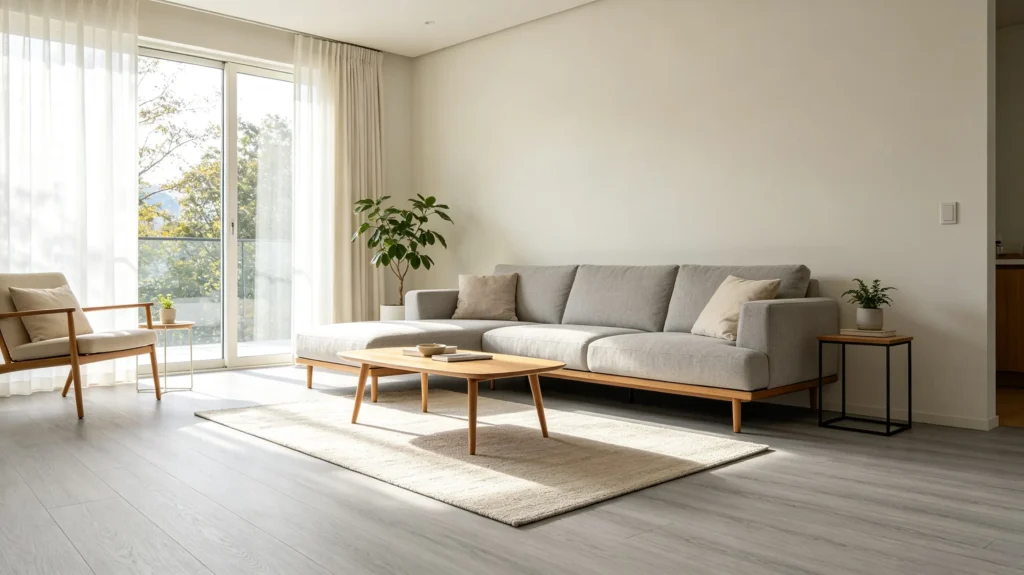
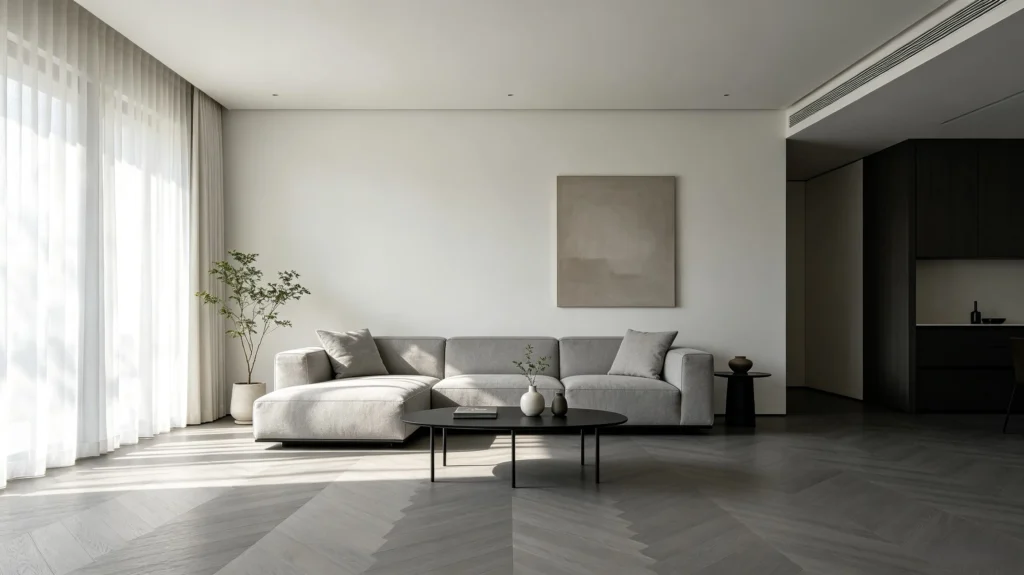
Light Grey Vinyl Flooring: Bright and Airy
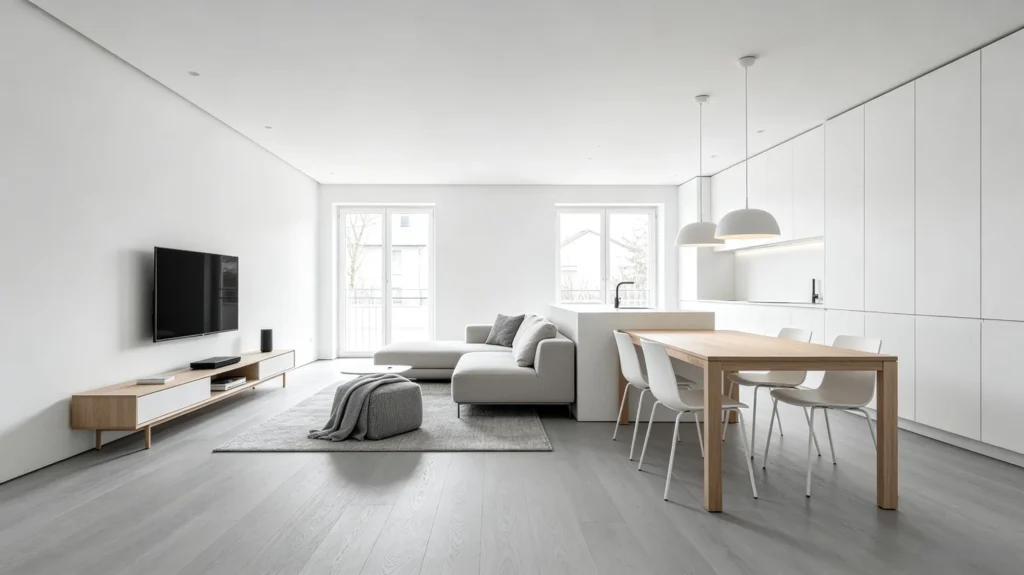
Light grey vinyl flooring is particularly suitable when the goal is to make an interior feel open, clean, and spacious.
In a smaller living room or bedroom, a light grey floor can work well with white walls and light-colored furniture. The relatively low contrast between the floor and walls creates a continuous visual field rather than dividing the room into strong horizontal bands.
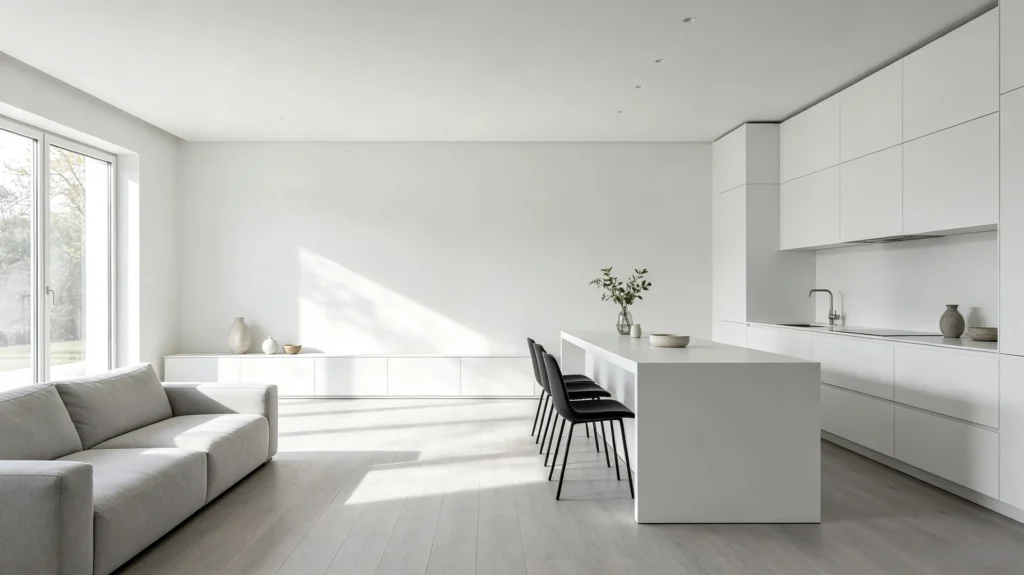
Light Grey + White
This is one of the simplest combinations.
White walls, white cabinetry, and light grey flooring can create a clean minimalist appearance. The flooring introduces enough contrast to keep the room from looking completely white while maintaining a restrained color palette.
This combination works particularly well in:
- Modern apartments
- Minimalist living rooms
- Small bedrooms
- Contemporary offices
- Healthcare and other clean-looking interiors
Light Grey + Natural Wood
If an all-white and grey interior feels too cool, natural wood is one of the easiest ways to introduce warmth.
Wooden furniture, cabinets, shelving, or doors can create contrast against the grey floor without competing with it. This combination is especially effective when the grey vinyl has a wood-look surface rather than a completely uniform finish.
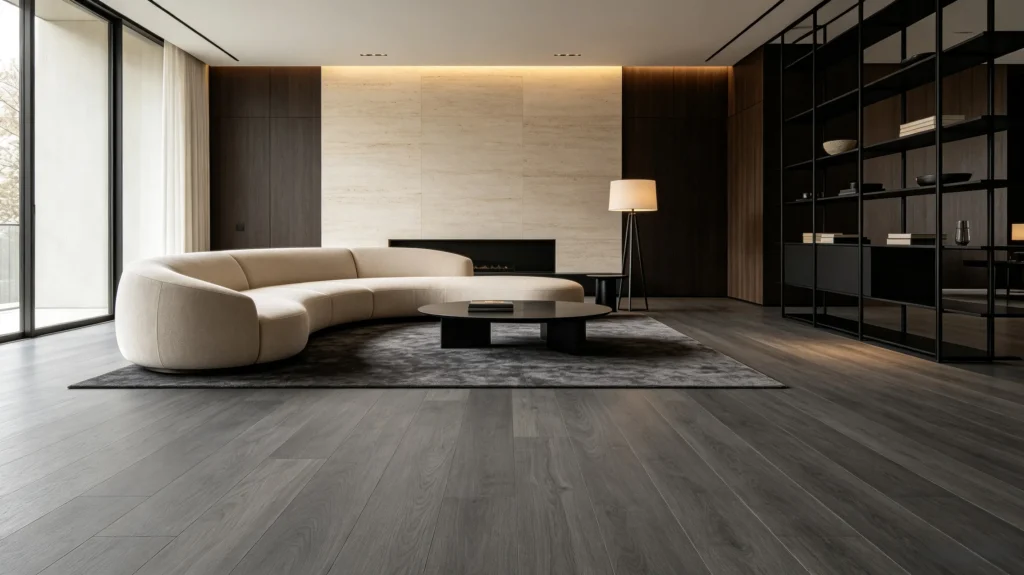
Dark Grey Vinyl Flooring: Dramatic and Grounded
Dark grey vinyl flooring creates a very different visual effect.
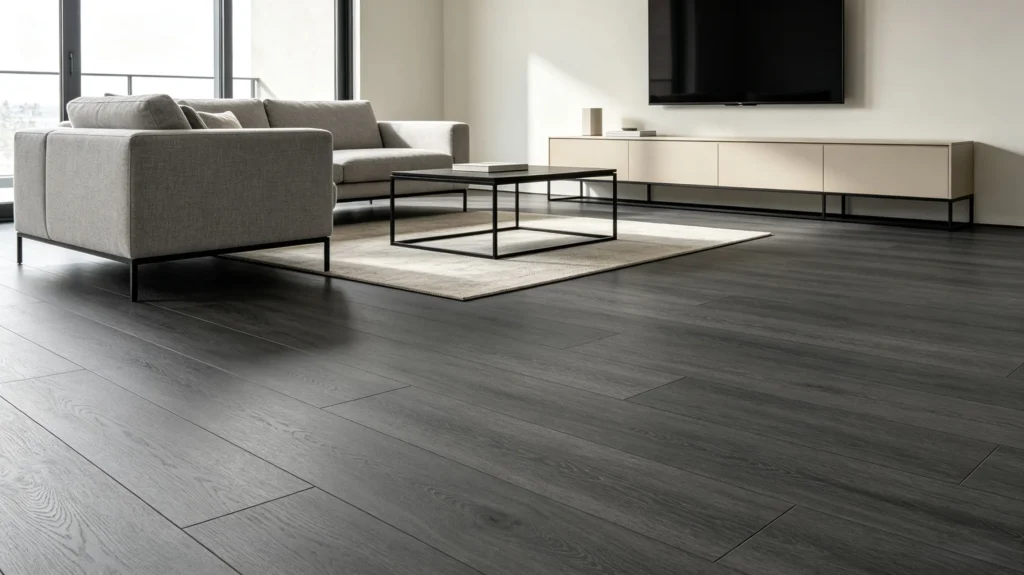
Rather than making a room feel light and expansive, dark grey can give the floor more visual weight. It can work well in larger spaces with sufficient natural or artificial lighting.
Dark grey flooring can complement:
- Black metal details
- Deep blue furniture
- Dark wood
- Warm beige walls
- Leather furniture
- Contemporary lighting
- Industrial-style interiors
The main consideration is balance. A dark floor combined with dark walls and limited lighting can make a room feel smaller and heavier. Lighter walls, contrasting furniture, and adequate lighting can help maintain visual balance.
Grey Wood-Look Vinyl Flooring: A Softer Take on Grey
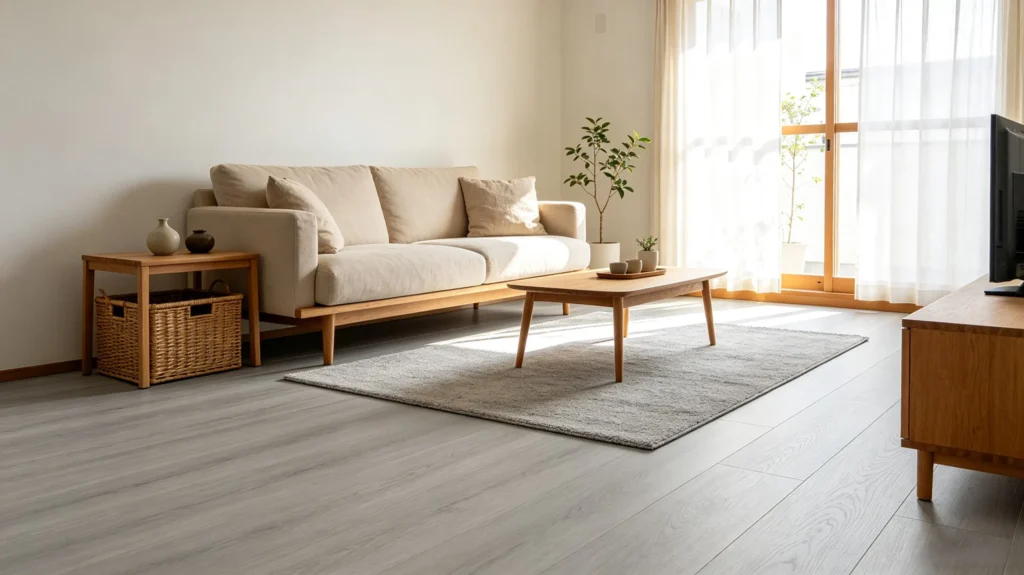
Not all grey vinyl flooring has a concrete or solid-color appearance. Grey wood-look flooring combines a neutral grey palette with visible grain patterns and plank variation.
This can be a useful choice when you like the contemporary character of grey but do not want the room to feel overly industrial.
The wood grain adds visual movement and makes the floor feel more natural. Depending on the shade, grey oak-style flooring can work with Scandinavian, modern farmhouse, contemporary, coastal, or minimalist interiors.
A slightly warm grey can be particularly effective because it retains the neutrality of grey while avoiding an overly cold appearance.
Grey Concrete-Look Vinyl Flooring: Contemporary and Industrial
Concrete-look grey flooring takes grey in another direction.
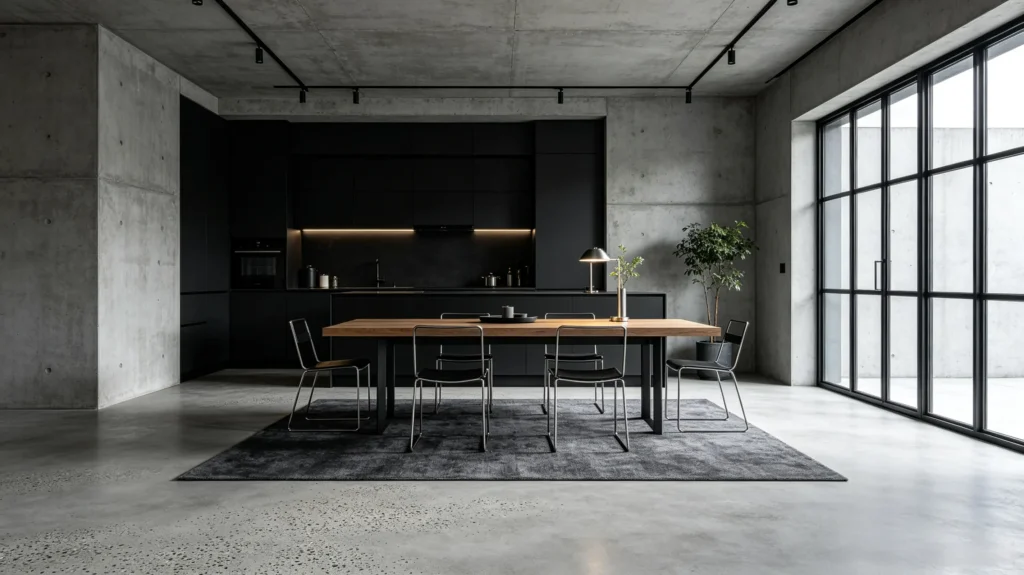
Its visual character is more architectural than wood-look flooring. Depending on the surrounding design, it can create an industrial, minimalist, or contemporary atmosphere.
It can work especially well with:
- Black metal
- Glass partitions
- Exposed-style architectural elements
- Minimalist furniture
- White walls
- Neutral textiles
- Modern lighting
Concrete-look flooring does not necessarily need to be used in an industrial interior. When combined with soft furniture, warm wood, and plants, it can provide a neutral background for a more comfortable contemporary space.
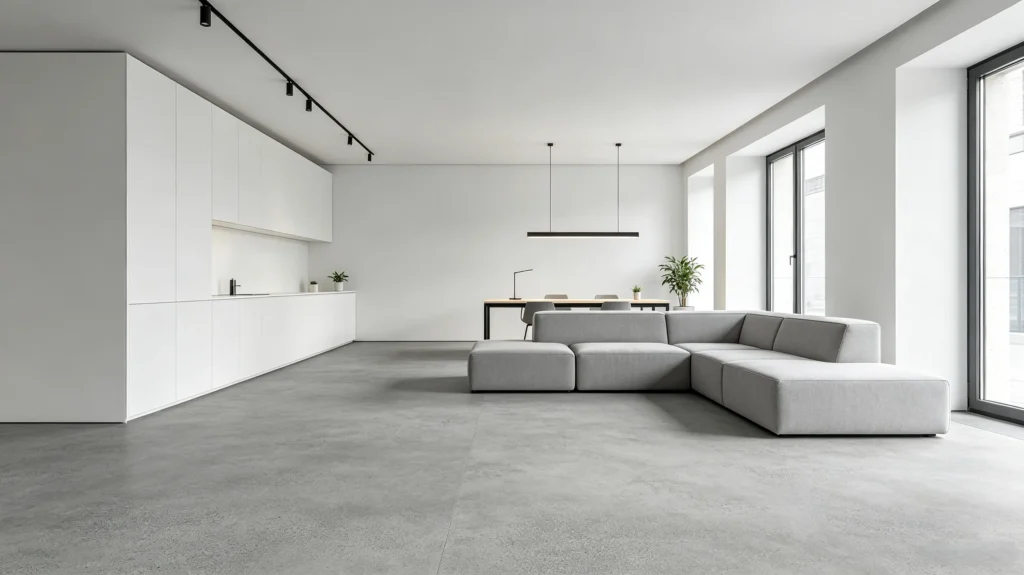
Grey Vinyl Flooring Ideas for Different Rooms
The same grey floor can look completely different depending on where it is used. Room size, natural light, furniture, and wall color all influence the final effect.
Grey Vinyl Flooring in the Living Room
The living room gives you the most flexibility.
Light grey works well when you want an airy, relaxed space. Medium grey can provide a neutral foundation for stronger furniture colors, while dark grey can create a more sophisticated and dramatic appearance.
For a warmer living room, combine grey flooring with:
- Natural wood furniture
- Beige or cream sofas
- Textured rugs
- Warm lighting
- Green plants
- Earth-tone accessories
If the flooring already has a strong wood grain or concrete pattern, keeping the furniture relatively simple can prevent the room from becoming visually crowded.
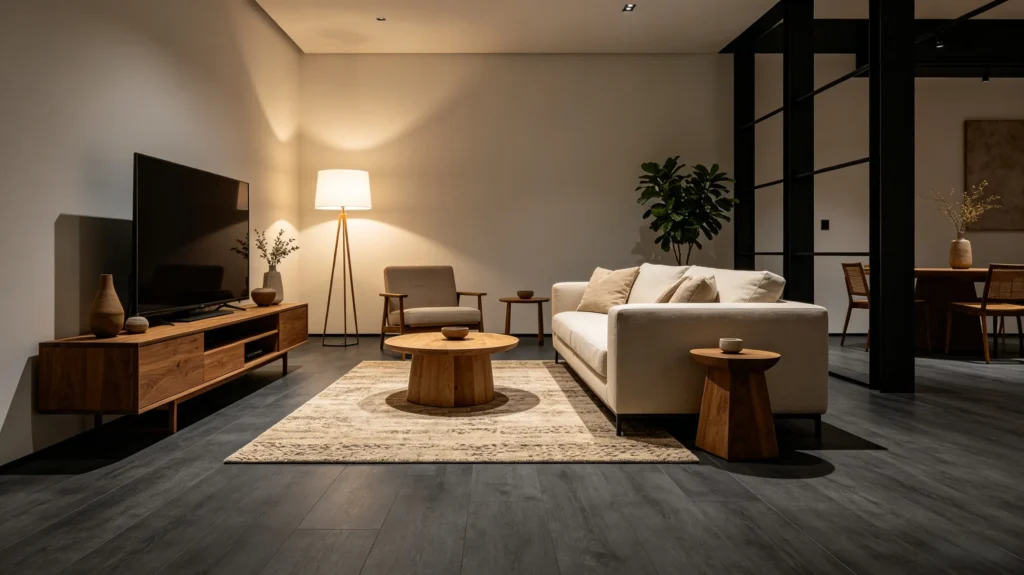
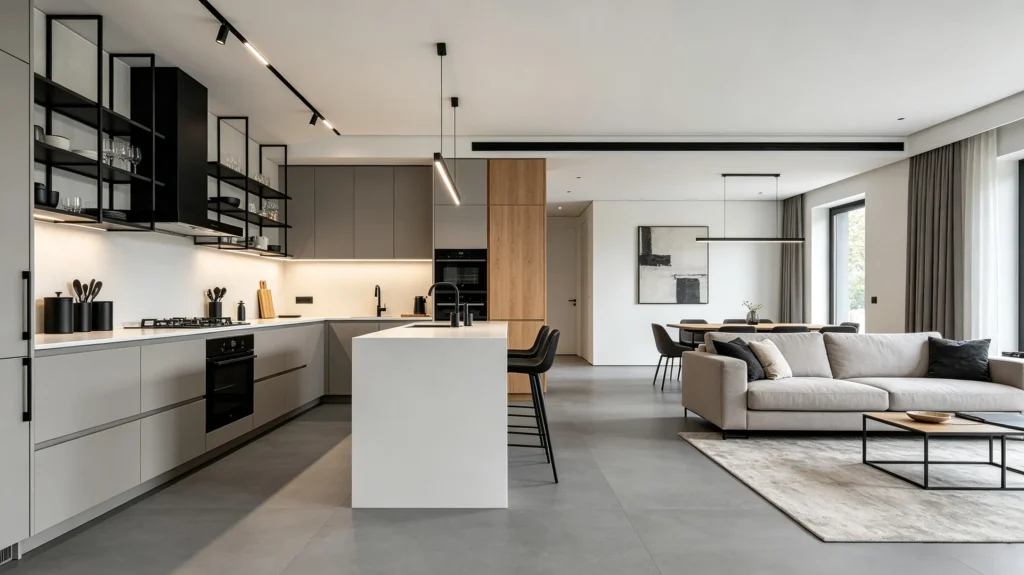
Grey Vinyl Flooring in the Kitchen
Grey flooring is particularly easy to coordinate with kitchen cabinetry.
For example:
Grey + White Cabinets
Creates a clean and contemporary appearance.
Grey + Natural Wood Cabinets
Adds warmth and reduces the coolness associated with grey.
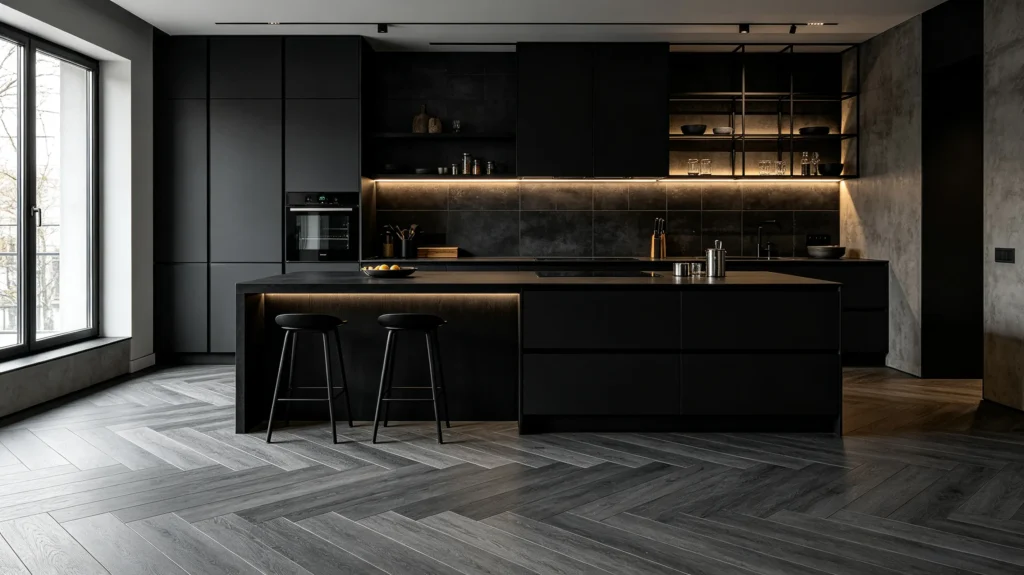
Grey + Black Cabinets
Creates a stronger, more dramatic modern look.
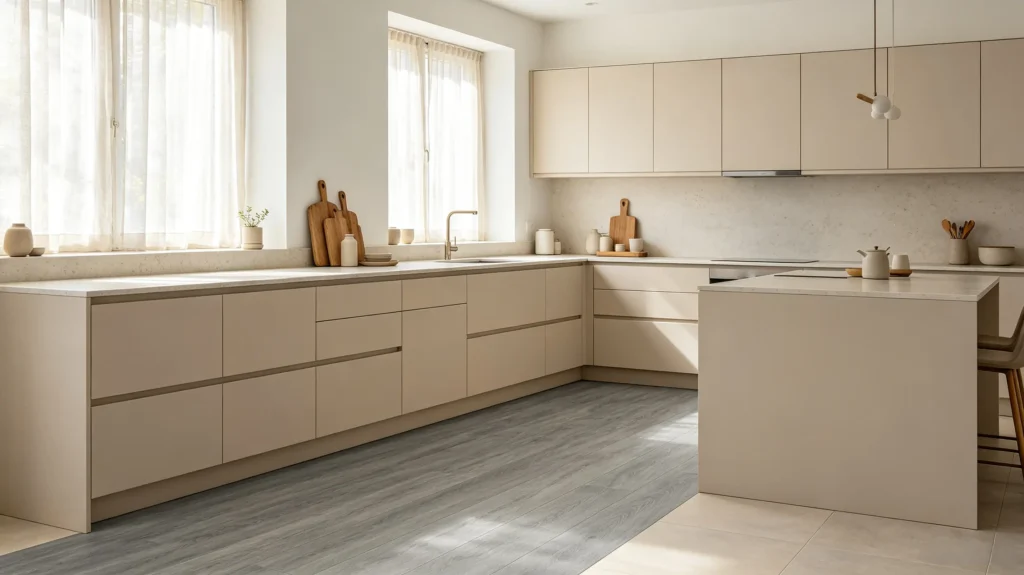
Grey + Beige Cabinets
Produces a softer and more neutral palette.
The amount of natural light should also influence your choice. A very dark grey floor may work beautifully in a large kitchen with generous daylight but feel unnecessarily heavy in a small, poorly lit space.
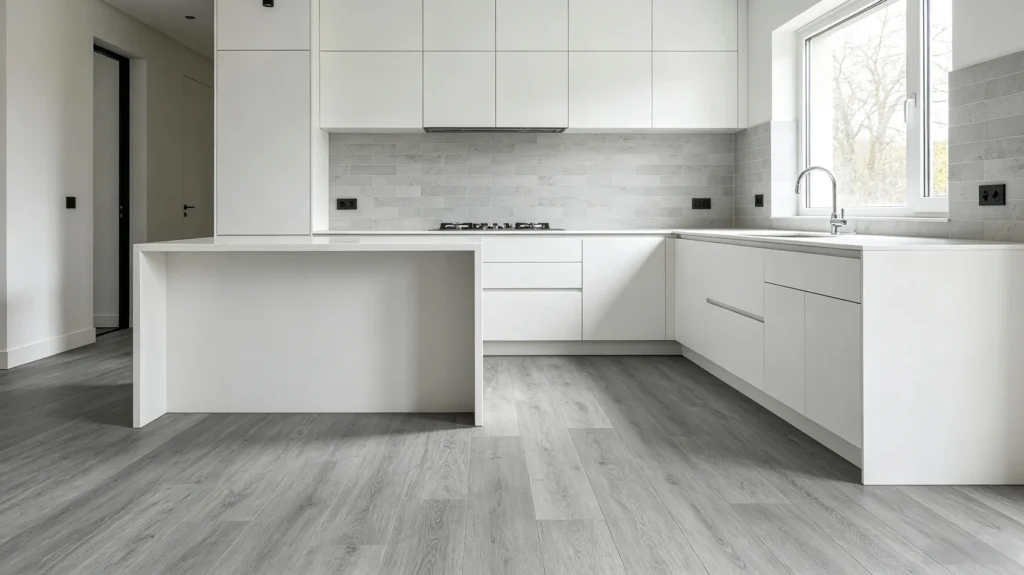
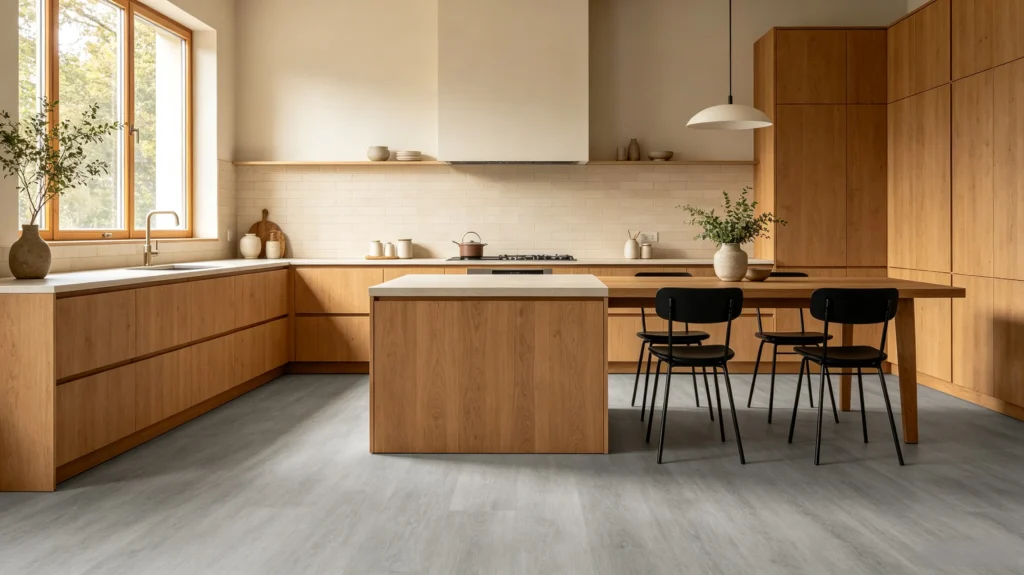
Grey Vinyl Flooring in the Bedroom
The bedroom usually benefits from a softer interpretation of grey.
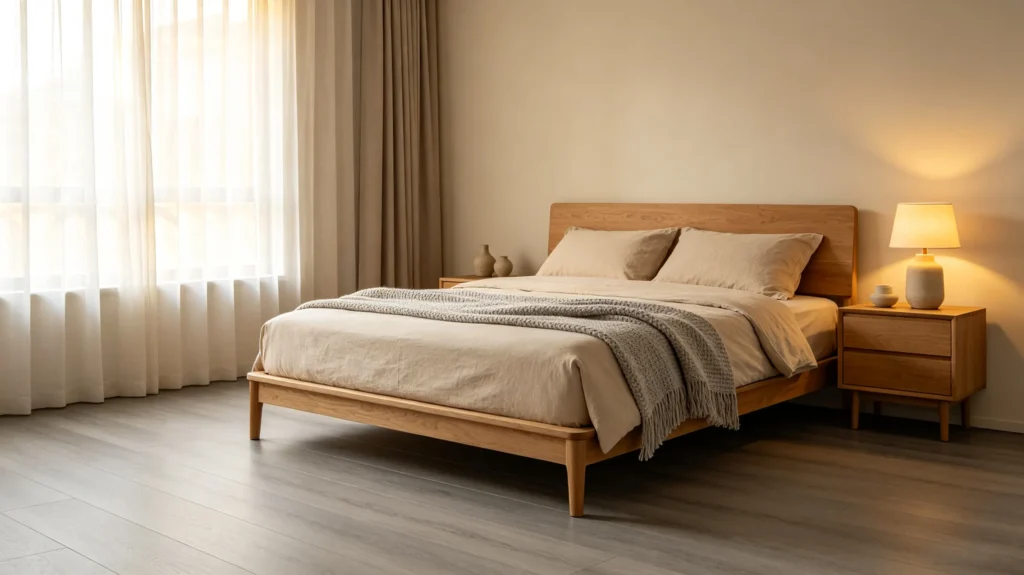
A warm grey or grey wood-look floor can provide a neutral base without making the room feel overly formal. Pairing it with beige bedding, warm wood furniture, cream walls, or muted green accents can create a calmer atmosphere.
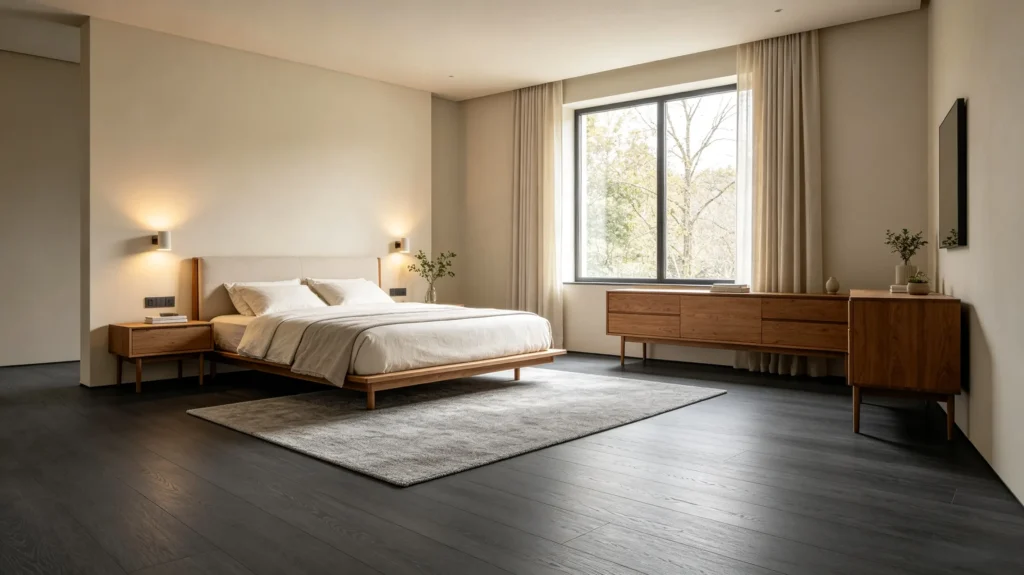
Very dark grey can also work, but it generally benefits from lighter walls and textiles to maintain a comfortable visual balance.
Grey Vinyl Flooring in the Bathroom
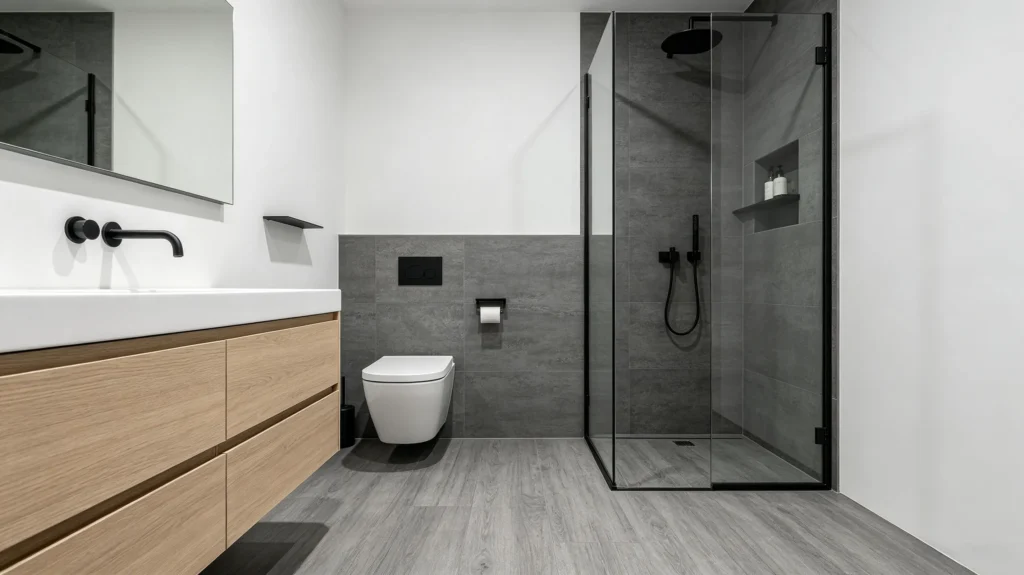
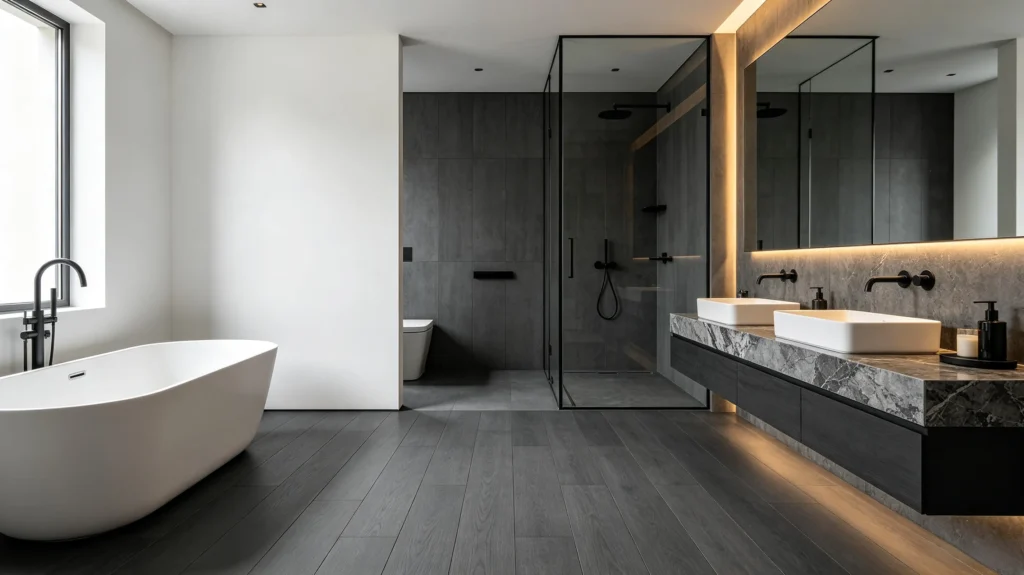
Grey is a natural fit for contemporary bathroom design because it works easily with white sanitary fixtures, stone-look surfaces, black hardware, and wood accents.
Light grey can make a compact bathroom feel brighter. Medium and dark grey can create a stronger contrast against white walls and fixtures.
For bathroom applications, appearance should not be the only consideration. The flooring construction, water resistance, slip performance, installation method, and suitability for wet environments should all be checked against the specific product specifications.
Grey Vinyl Flooring in Hallways
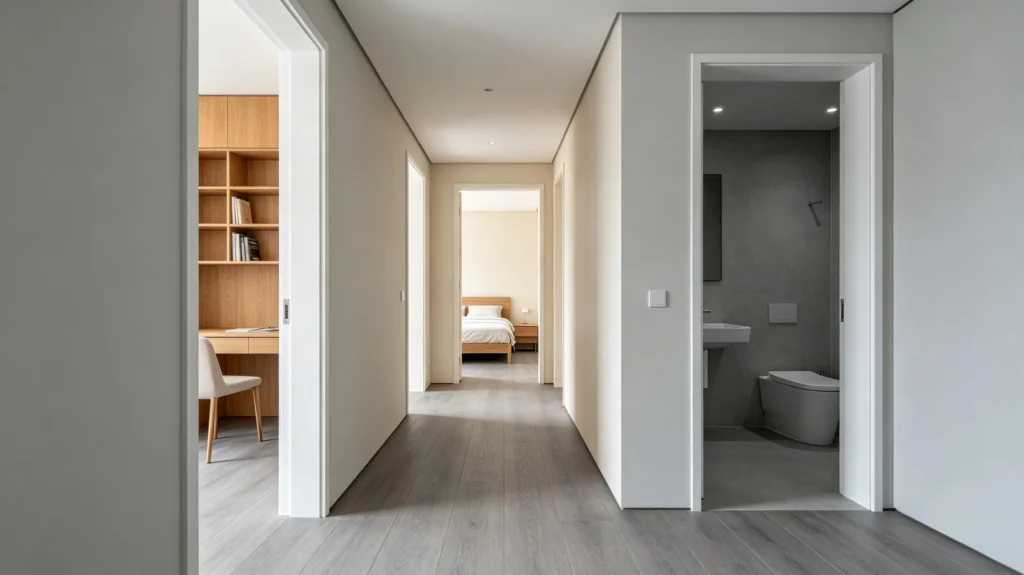
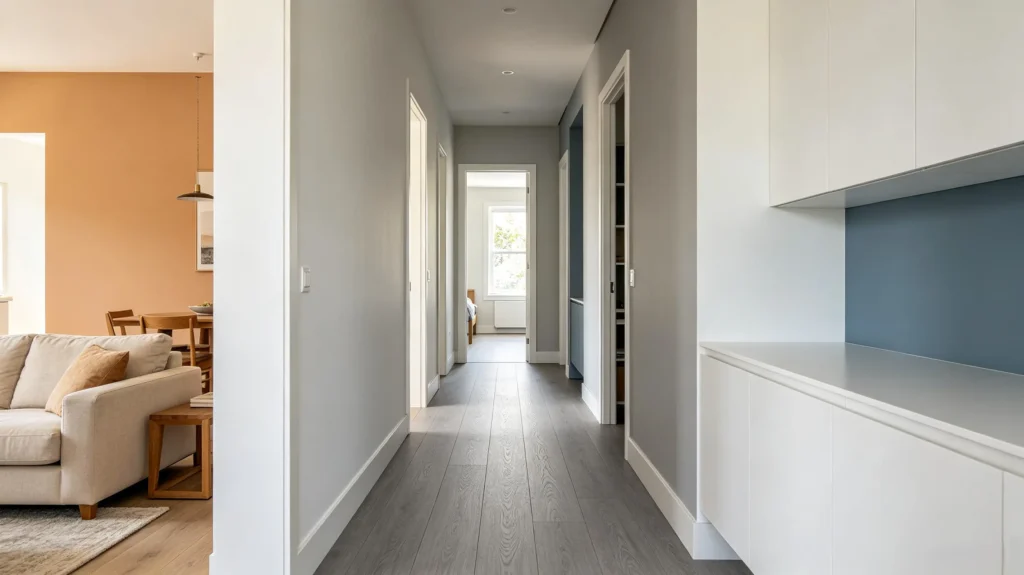
Hallways often connect several rooms with different furniture and wall colors. A neutral grey floor can help create visual continuity between these spaces.
A medium grey or subtle grey wood-look pattern can be particularly practical when you want the hallway to connect with both warm and cool interior palettes.
What Colors Go Well With Grey Vinyl Flooring?
Grey does not have to mean a grey-and-white interior. Its neutral character gives you considerable flexibility.
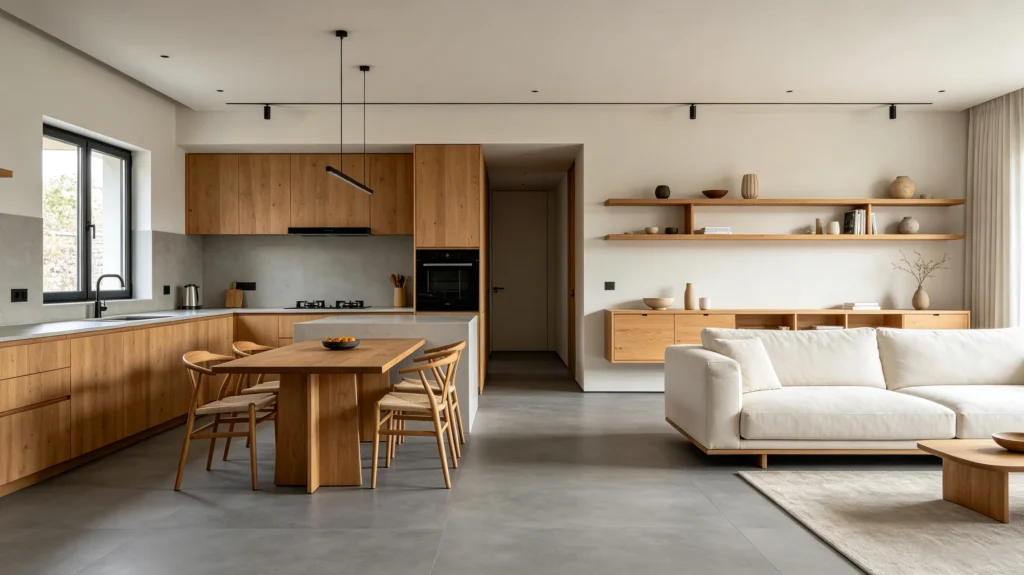
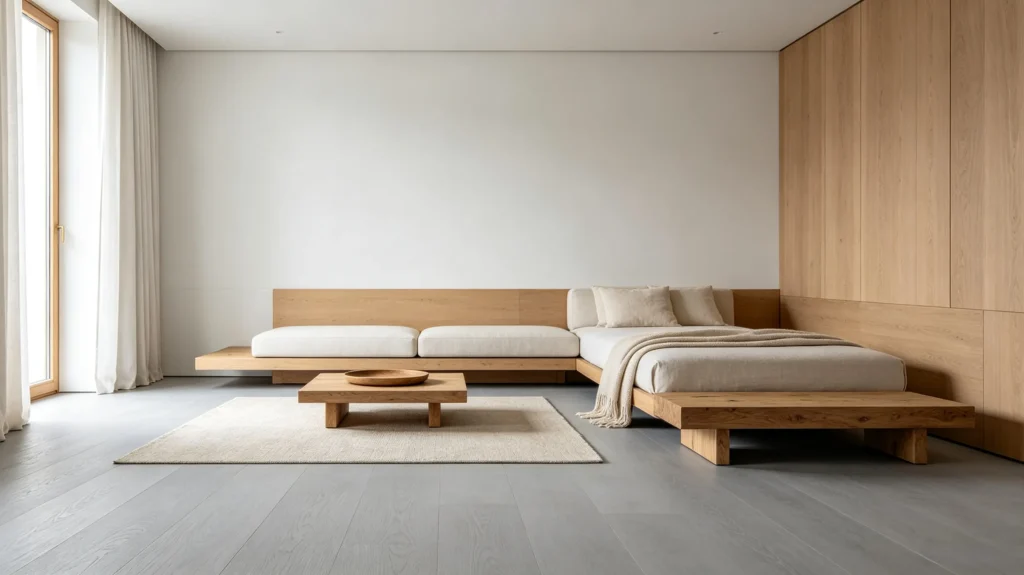
Grey + Natural Wood
One of the most reliable combinations for making grey flooring feel warmer.
The contrast between a cool-neutral floor and natural wood introduces texture and warmth without making the interior look overly colorful.
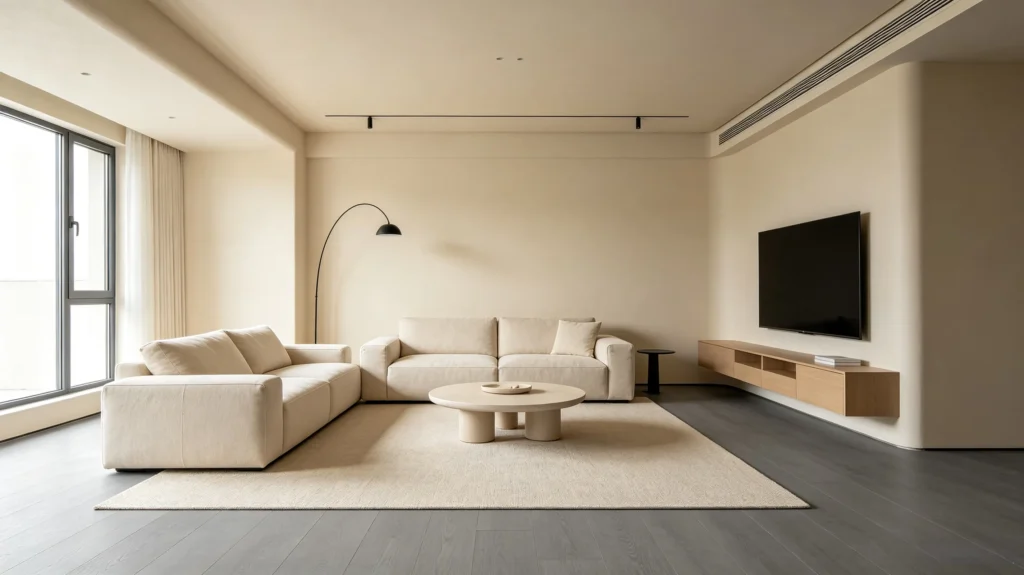
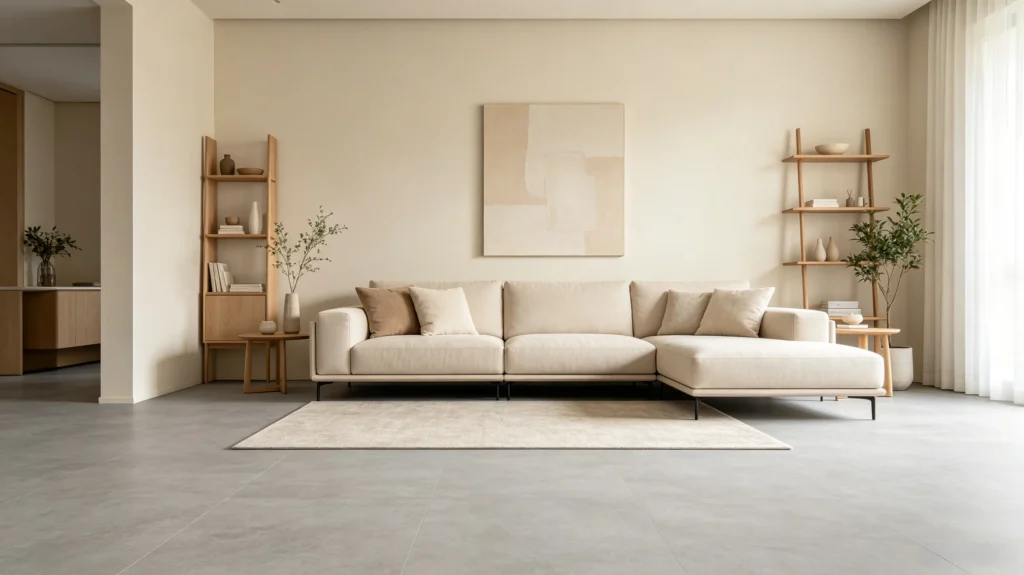
Grey + Beige or Cream
Beige, cream, and off-white can soften grey flooring considerably.
This combination is useful for bedrooms, living rooms, hotels, and other spaces where you want a contemporary appearance without an overly cold atmosphere.
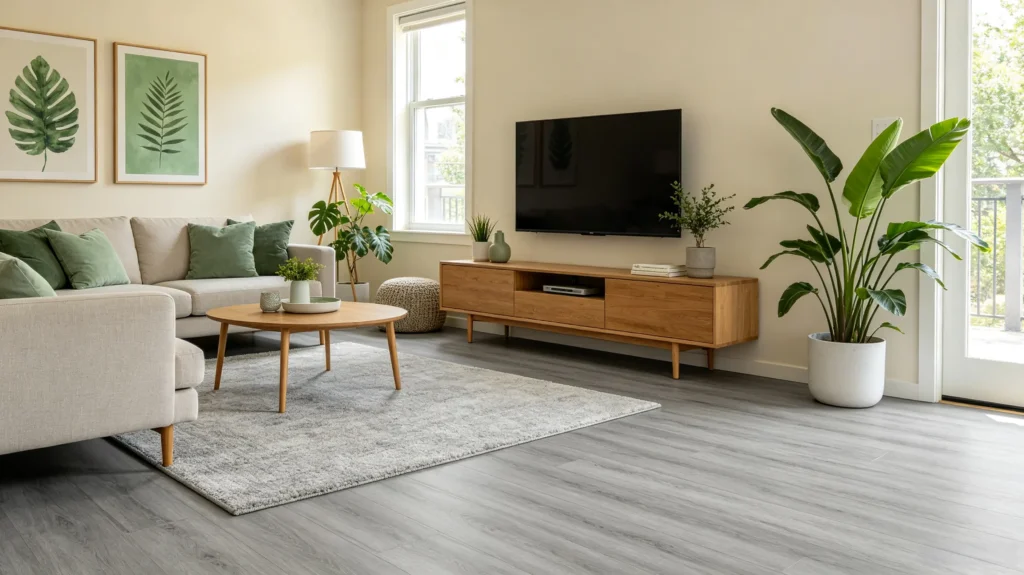
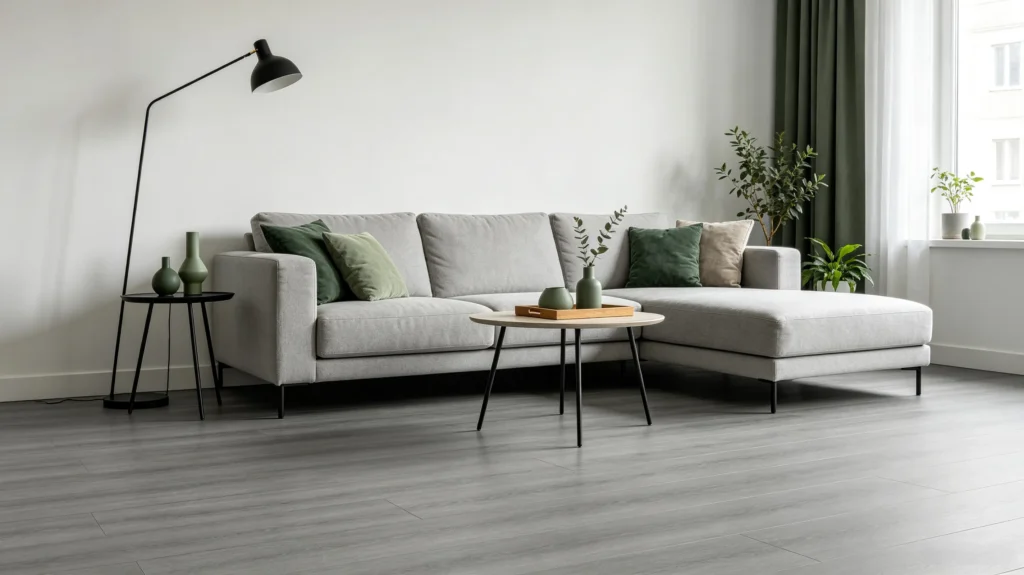
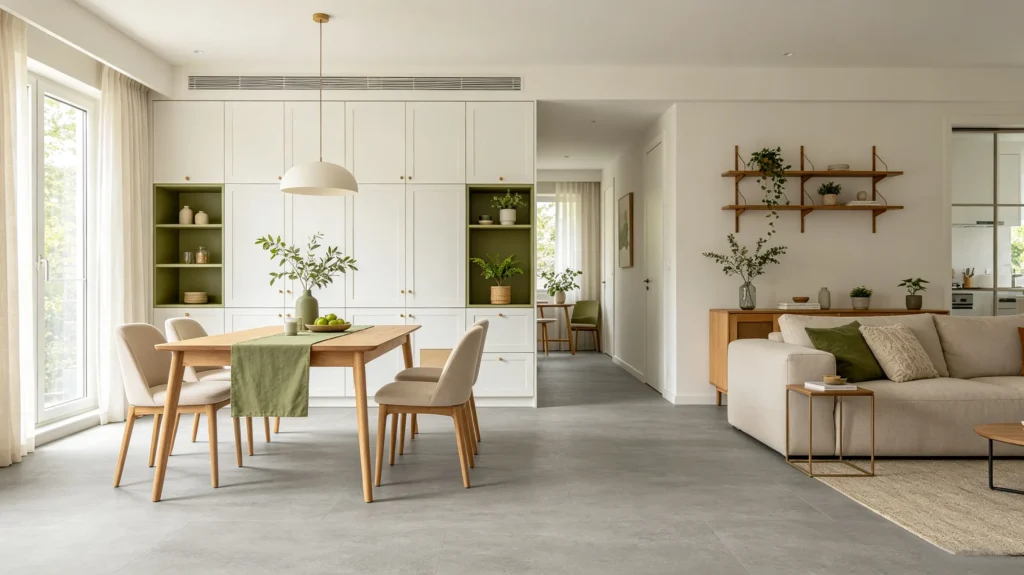
Grey + Green
Muted green can bring a more natural character to a grey interior.
Plants, olive-green furniture, sage accents, or other earthy green tones can work particularly well with light and medium grey flooring.
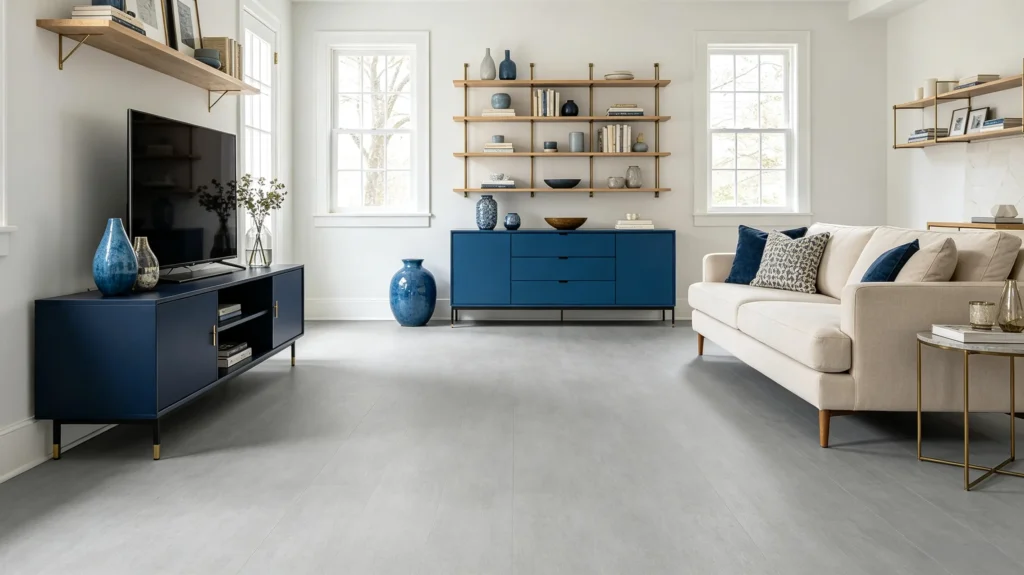
Grey + Navy or Blue
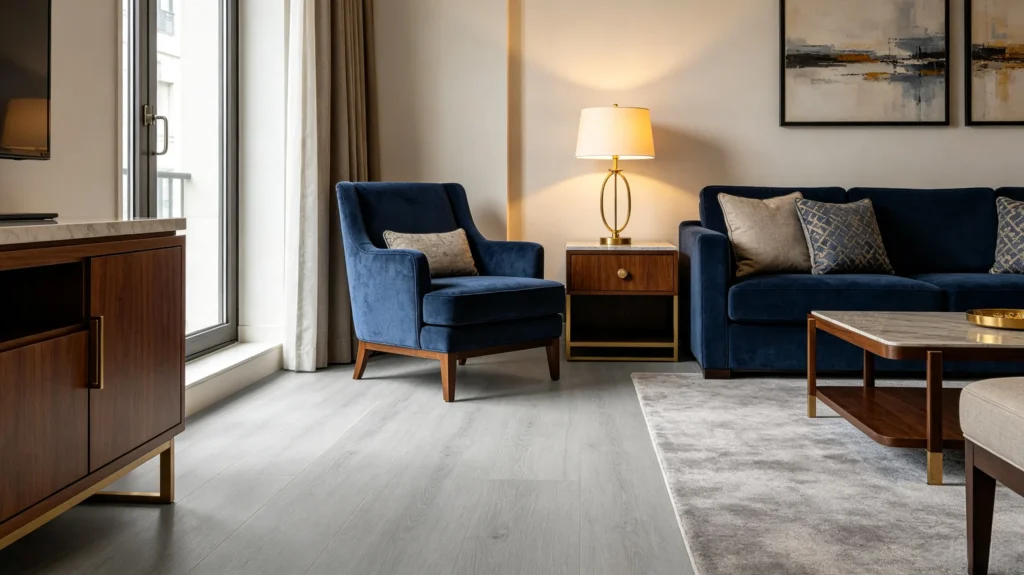
Deep blue creates a more sophisticated contrast.
Navy furniture against a lighter grey floor can give a living room or hospitality space a polished appearance without relying on black.
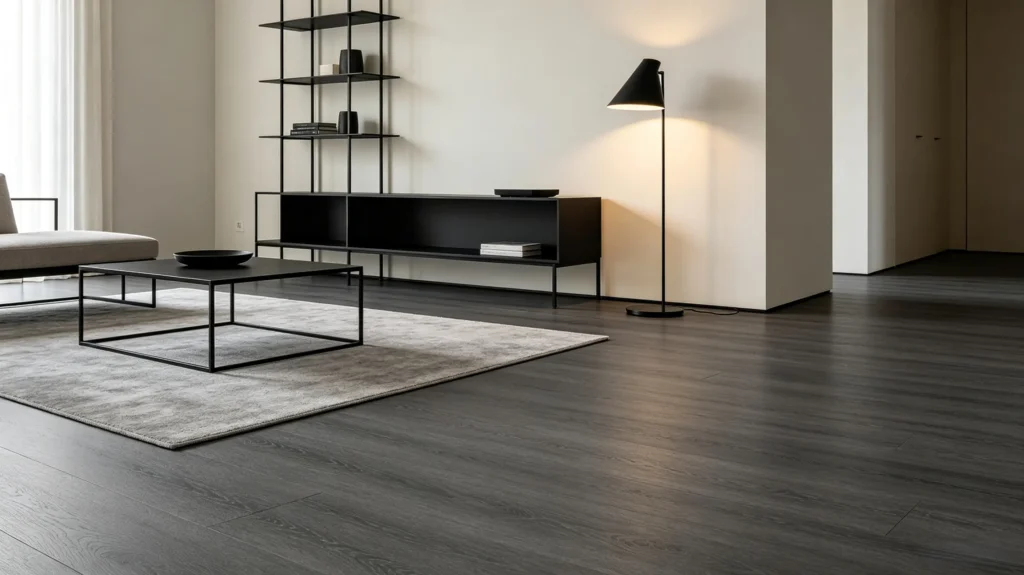
Grey + Black
Black accents can strengthen the architectural character of grey flooring.
Black metal frames, lighting fixtures, furniture legs, or kitchen hardware can work particularly well with medium and dark grey floors.
How Can You Make Grey Vinyl Flooring Feel Warmer?
One of the most common concerns about grey flooring is that it can make an interior feel cold.
That can happen, but the floor itself is not necessarily the problem. An interior dominated by grey walls, grey furniture, grey flooring, and cool white lighting can lack visual warmth.
You can change the effect without replacing the flooring.
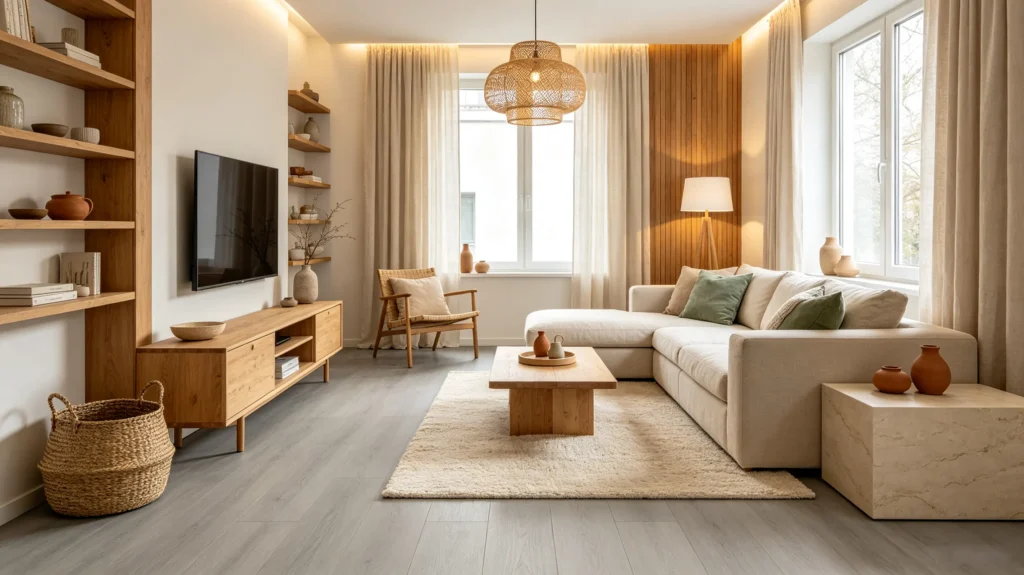
Add Natural Materials
Wood, rattan, linen, stone, and other natural-looking materials can introduce texture and warmth.
Use Warm Lighting
Lighting can significantly change how grey flooring appears. Warm-toned lighting can make grey surfaces appear softer than cool, high-intensity lighting.
Introduce Beige and Cream
If the floor is cool grey, warm neutrals in sofas, curtains, rugs, or bedding can create a more balanced palette.
Add Greenery
Plants provide both color and organic texture, helping a neutral grey floor feel less sterile.
Avoid Making Everything Grey
This is perhaps the most important point.
Grey flooring does not require a grey interior. In fact, using too much grey can flatten the visual contrast of a room.
Think of grey flooring as a neutral foundation, then use furniture, walls, lighting, and accessories to establish the character of the space.
Is Grey Vinyl Flooring Still in Style?
Grey vinyl flooring is still a versatile design option, but the way it is used has changed.
The concern about grey flooring becoming dated is usually connected to the popularity of interiors that used grey floors together with grey walls, grey furniture, and other cool neutral elements. When almost every surface has the same grey tone, the space can look flat or overly associated with a particular design trend.
That does not mean grey flooring itself is outdated.
A more balanced approach is to combine grey flooring with warm wood, beige, cream, natural textures, greenery, or carefully chosen contrasting colors. Grey wood-look flooring and warmer grey tones can also create a softer appearance than uniform cool-grey surfaces.
The question is less about whether grey is “in” or “out” and more about how the grey floor is integrated into the overall interior.
Grey Vinyl Flooring for Commercial Interiors
Grey flooring is not limited to residential interiors.
Its neutral appearance can work well in offices, retail environments, hospitality spaces, serviced apartments, and other commercial interiors where the flooring needs to support a broader design concept.
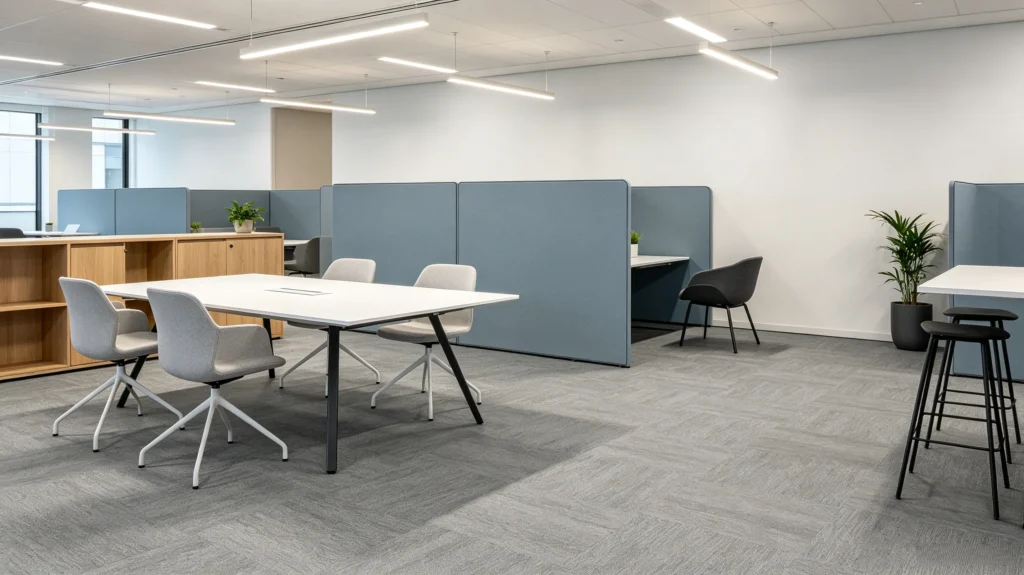
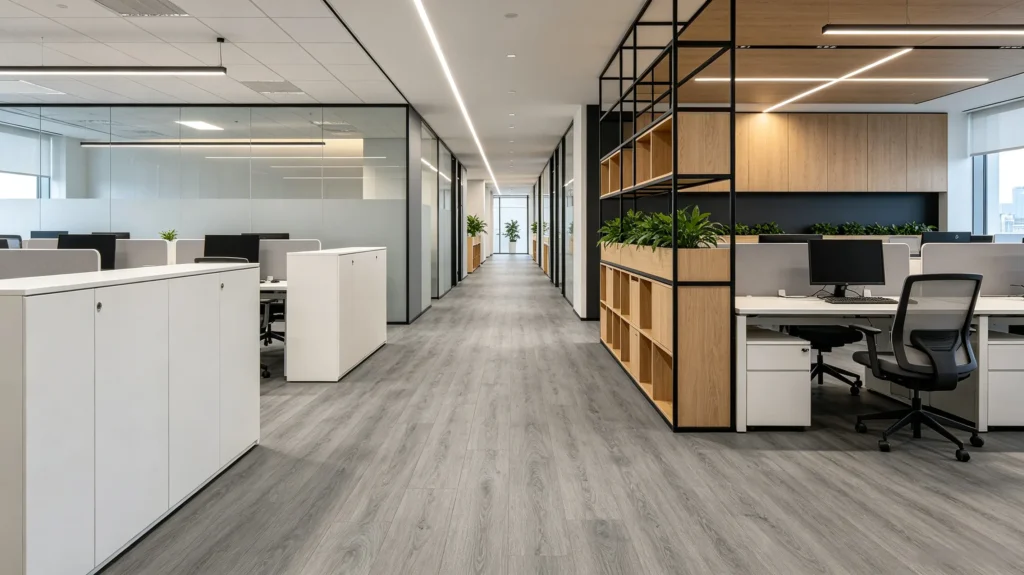
In an office, medium grey can provide a professional background for furniture and partitions.
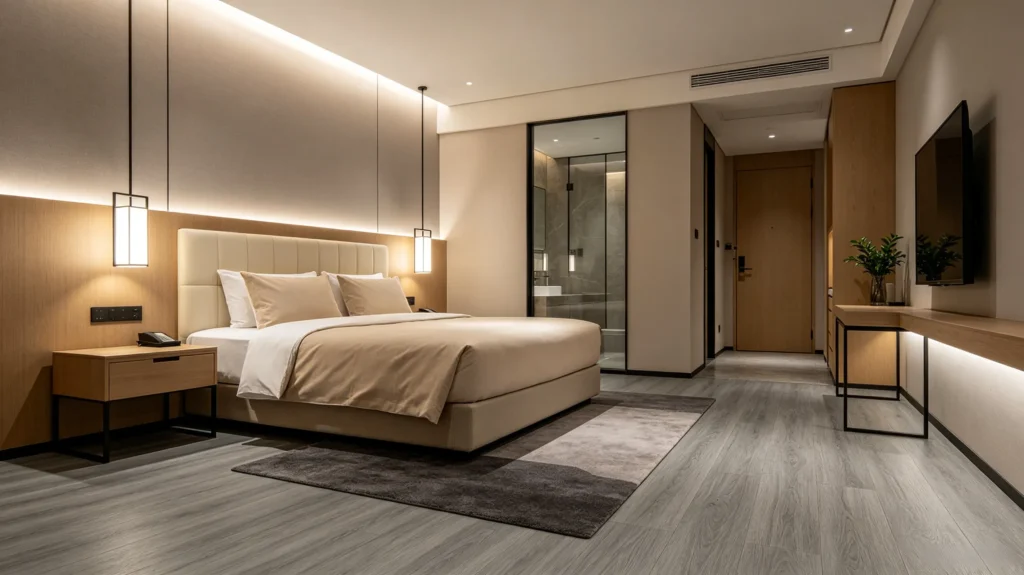
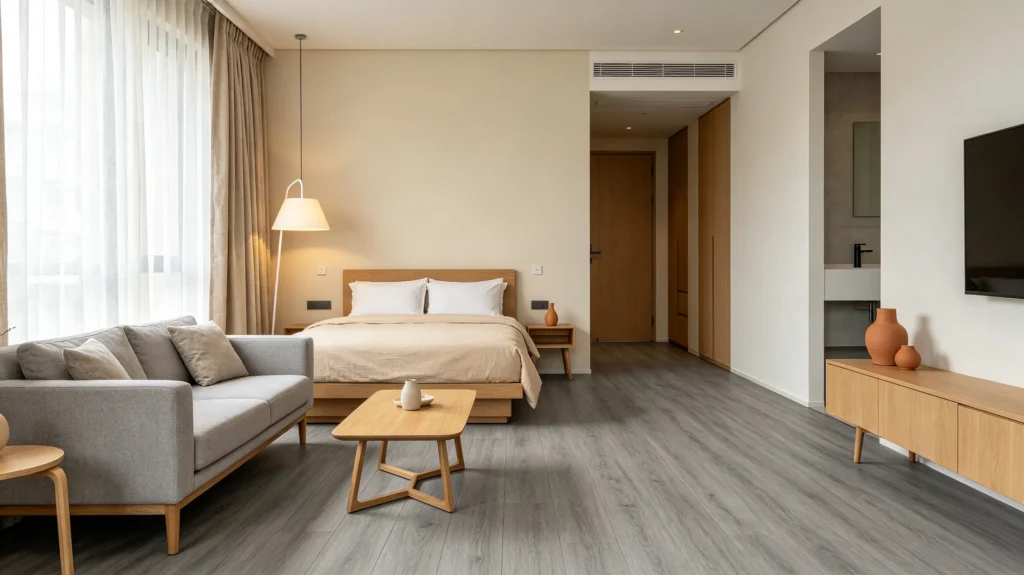
In a hotel or serviced apartment, grey wood-look flooring can provide a more residential feel while maintaining a contemporary appearance.
In retail spaces, concrete-look grey flooring can support an industrial or minimalist concept, allowing products and displays to remain the visual focus.
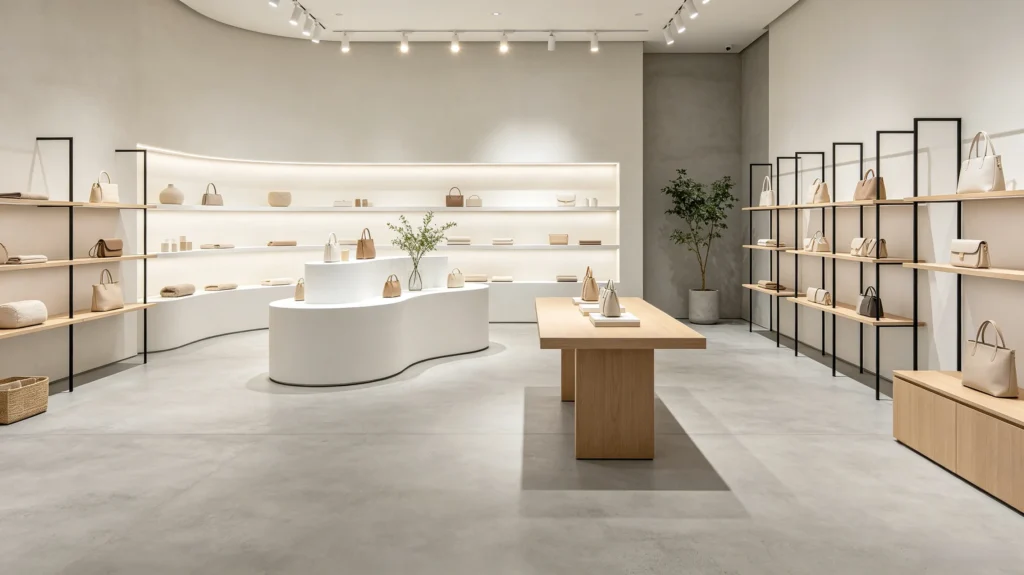
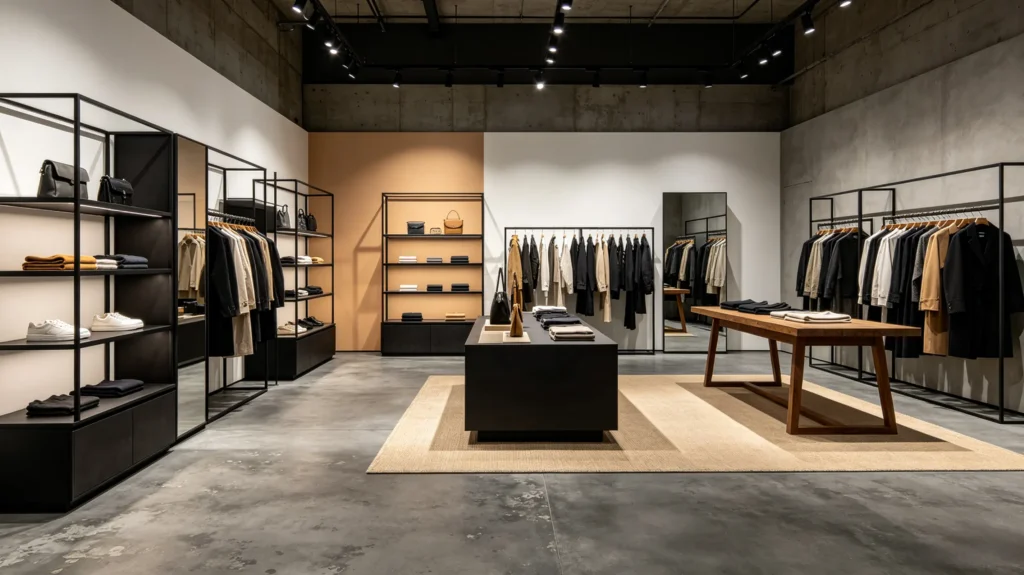
For commercial applications, however, visual appearance is only one part of the decision. Traffic level, wear resistance, maintenance requirements, installation conditions, and applicable performance standards should also be considered.
How to Choose the Right Grey Vinyl Flooring
Before choosing a grey vinyl floor based only on a product photograph, consider how the material will interact with the actual space.
1. Consider the Amount of Natural Light
A light grey may help maintain brightness in a darker room, while dark grey can work well in a space with abundant daylight.
2. Look at the Undertone
Grey can have cool blue undertones or warmer beige and brown undertones.
If you are concerned about a cold appearance, warmer grey or greige tones may be easier to integrate with wood and warm neutrals.
3. Decide Between Wood-Look and Concrete-Look
Wood-look grey vinyl tends to create a softer and more residential appearance.
Concrete-look grey vinyl generally creates a more contemporary or industrial character.
4. Consider the Surface Pattern
Subtle grain, tonal variation, and texture can make the floor more visually dynamic than a completely uniform grey surface.
5. Match the Flooring to the Room’s Scale
Large rooms can accommodate stronger patterns and darker tones more easily. Smaller rooms often benefit from lighter shades and simpler patterns, although lighting and the rest of the interior can change the result.
6. Think About the Entire Interior
Do not choose the floor in isolation.
Look at the flooring alongside wall colors, cabinetry, furniture, doors, lighting, and other large surfaces. A grey floor that looks cold in a product sample may look much warmer once combined with natural wood and warm lighting.
Final Thoughts
Grey vinyl flooring can create far more than a simple neutral floor. Light grey can make a room feel open and airy, dark grey can add depth, grey wood-look flooring can bring warmth, and concrete-look designs can strengthen a modern architectural style.
The best result comes from treating grey as the foundation of the interior rather than the entire color scheme. Consider the shade, pattern, lighting, surrounding materials, and intended use together, and grey vinyl flooring can adapt to a wide range of residential and commercial spaces.
Looking for the right grey vinyl flooring for your project? Contact timmy.wu@timotechs.com to discuss your flooring requirements and explore suitable options from TIANAN New Materials.