Black vinyl flooring can add contrast, depth, and a contemporary look to almost any interior. It works particularly well with white cabinetry, natural wood, warm neutral colors, and minimalist furniture. The key is to balance the dark floor with suitable lighting, wall colors, and furnishings so the room feels intentional rather than overly dark.
From modern living rooms to kitchens, bedrooms, and commercial interiors, these 12 black vinyl flooring ideas show how different finishes and color combinations can shape the overall design.
12 Black Vinyl Flooring Ideas for Different Spaces
1. Create a Modern Living Room with Black Vinyl Flooring
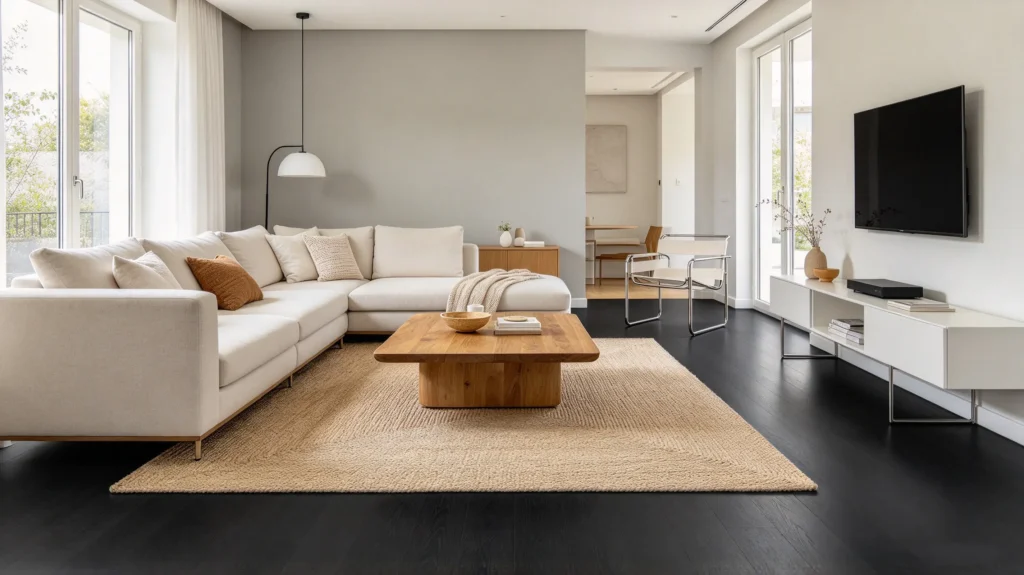
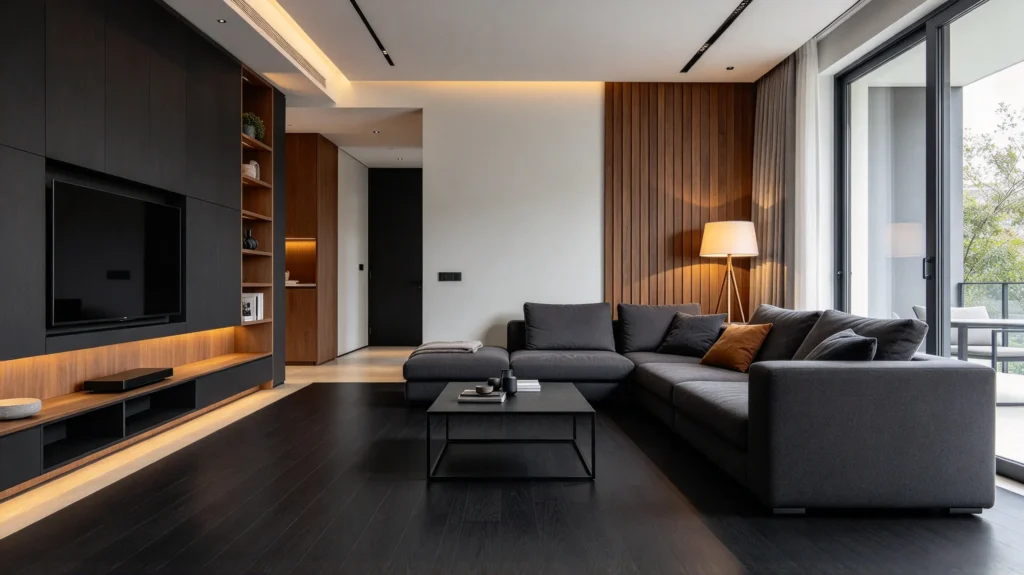
Black vinyl flooring can give a living room a clean, contemporary foundation. Pair it with a light-colored sofa, neutral walls, and simple furniture to create contrast without overwhelming the space.
Natural materials can soften the overall look. A wood coffee table, woven rug, or fabric upholstery introduces warmth and texture against the dark floor. In a room with large windows, natural light can also help balance the darker surface.
Design tip: Use a large cream or beige rug to define the seating area while allowing the black flooring to remain visible around the edges.
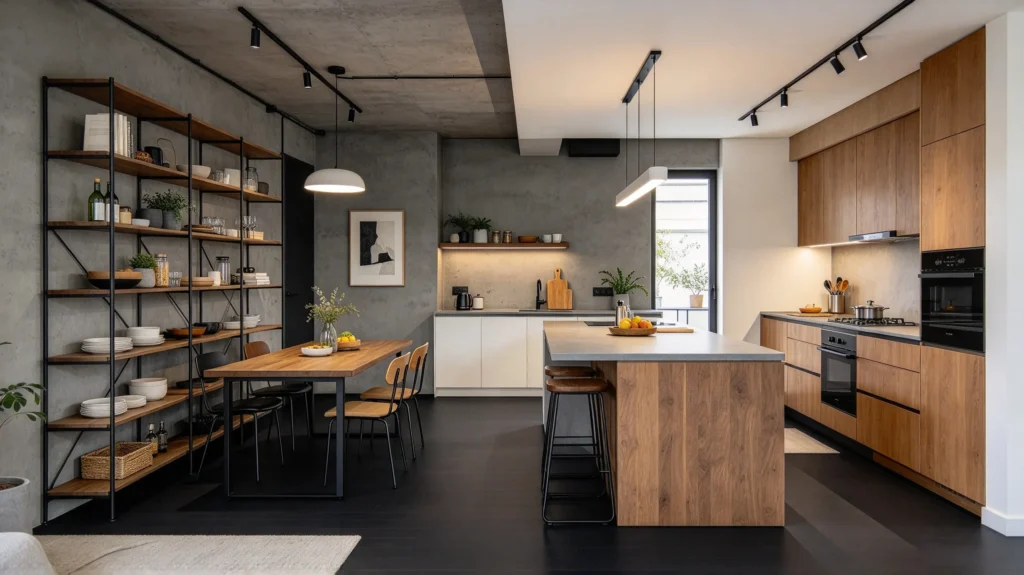
2. Pair Black Vinyl Flooring with White Kitchen Cabinets
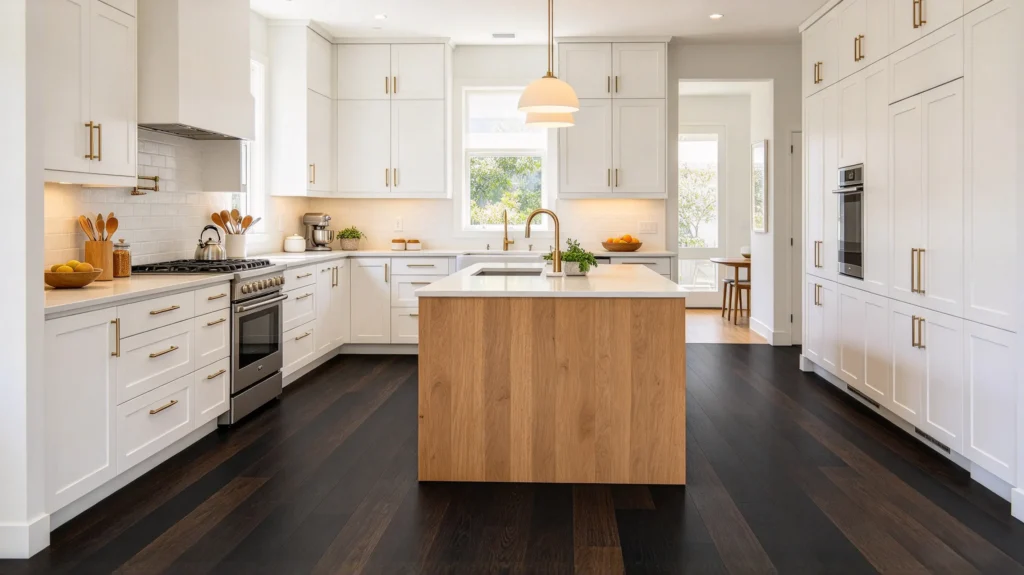
A black floor and white cabinets create a strong contrast that suits modern and transitional kitchens. The dark flooring grounds the room, while white cabinetry keeps the overall design bright and visually open.
For a more layered look, introduce a natural wood island, warm metallic handles, or a light countertop. These elements break up the black-and-white palette without making the kitchen feel visually busy.
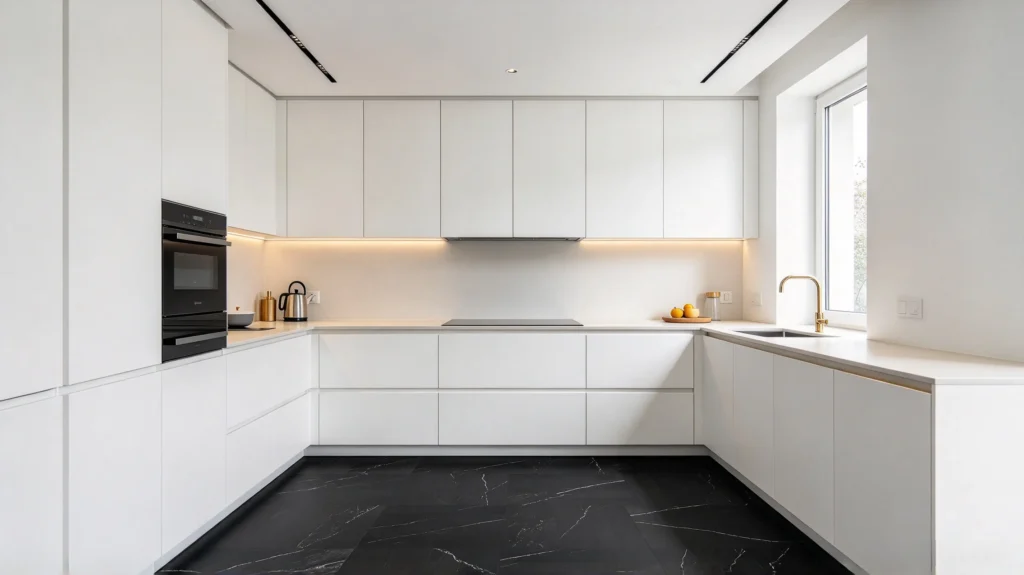
Black vinyl plank flooring can work well when a wood-look finish is desired, while a stone-look pattern may suit a more minimal kitchen design.
Design tip: If the kitchen receives limited natural light, use light-colored countertops, a bright backsplash, and layered task lighting to maintain visual balance.
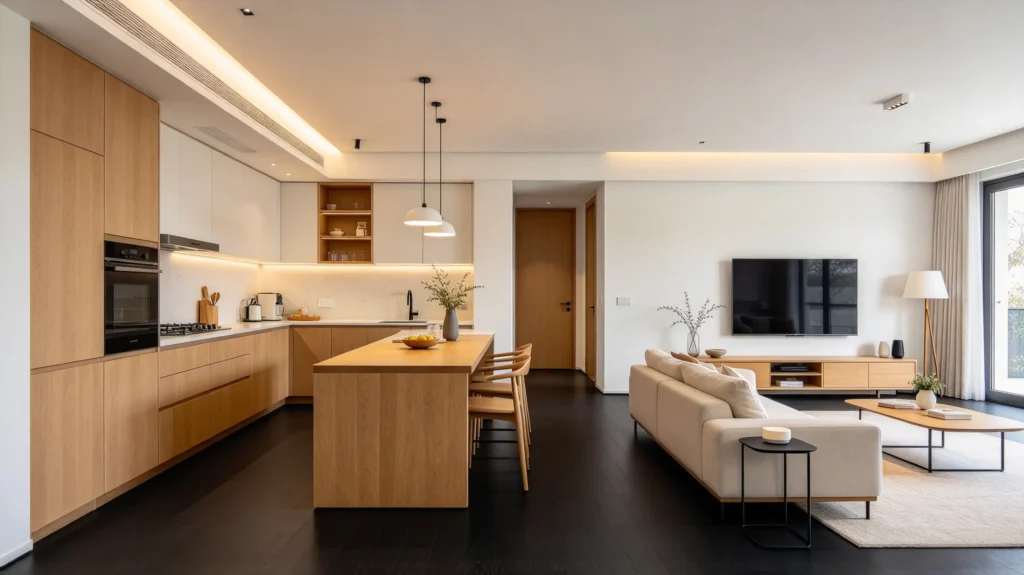
3. Combine Black Vinyl Plank Flooring with Natural Oak Furniture
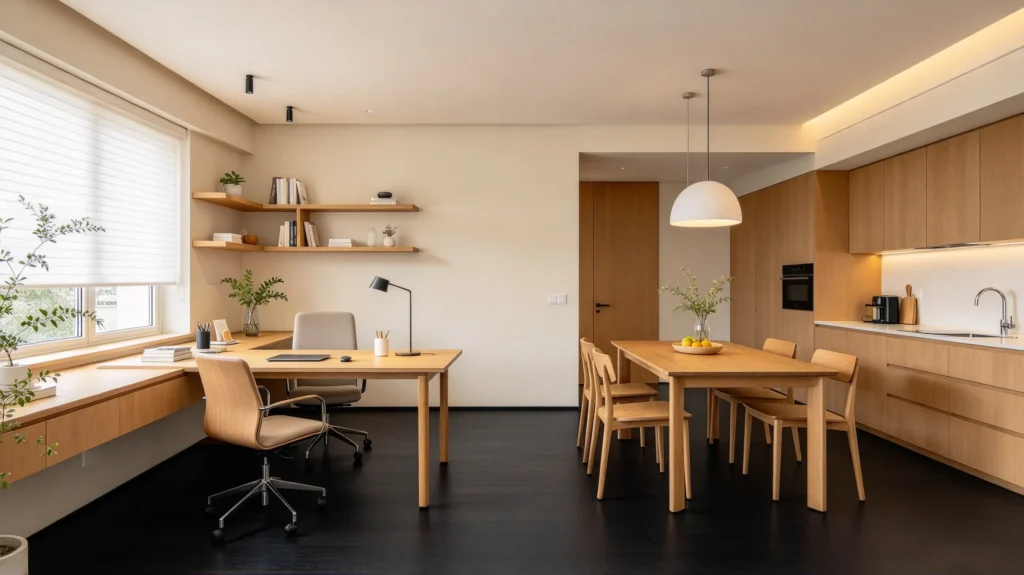
Natural oak and black flooring offer a useful balance between warmth and contrast. The dark floor creates a defined base, while the lighter wood introduces a softer, more natural element.
This combination works in living rooms, dining areas, home offices, and open-plan interiors. Oak dining tables, wooden shelving, and light wood cabinets can connect different parts of the room without requiring a large number of decorative accessories.
For a cohesive appearance, repeat the oak tone in two or three places rather than introducing several unrelated wood finishes.
Design tip: Choose warm white or soft beige walls to connect the dark floor and natural wood furniture.
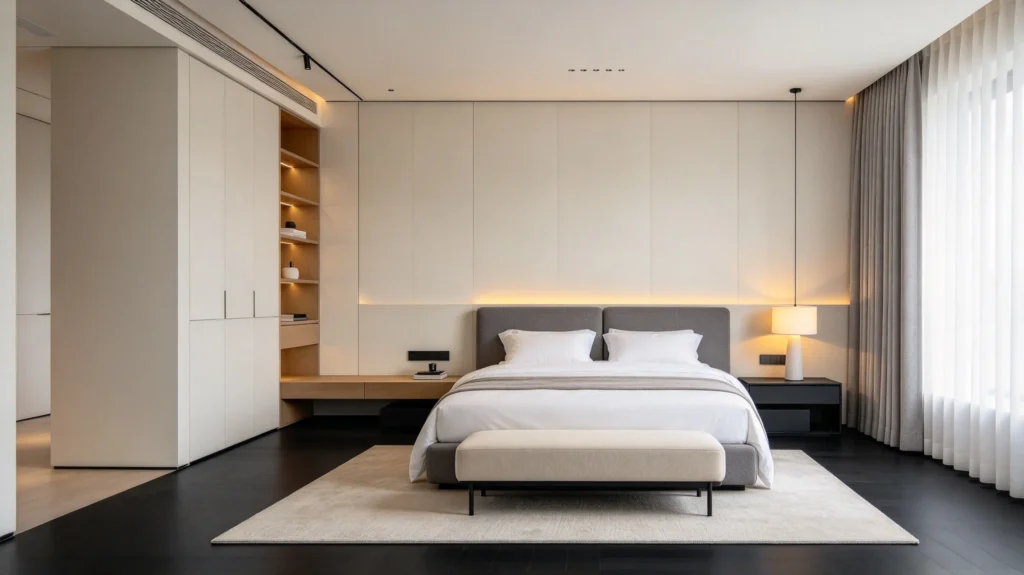
4. Use Black Vinyl Flooring in a Minimalist Bedroom
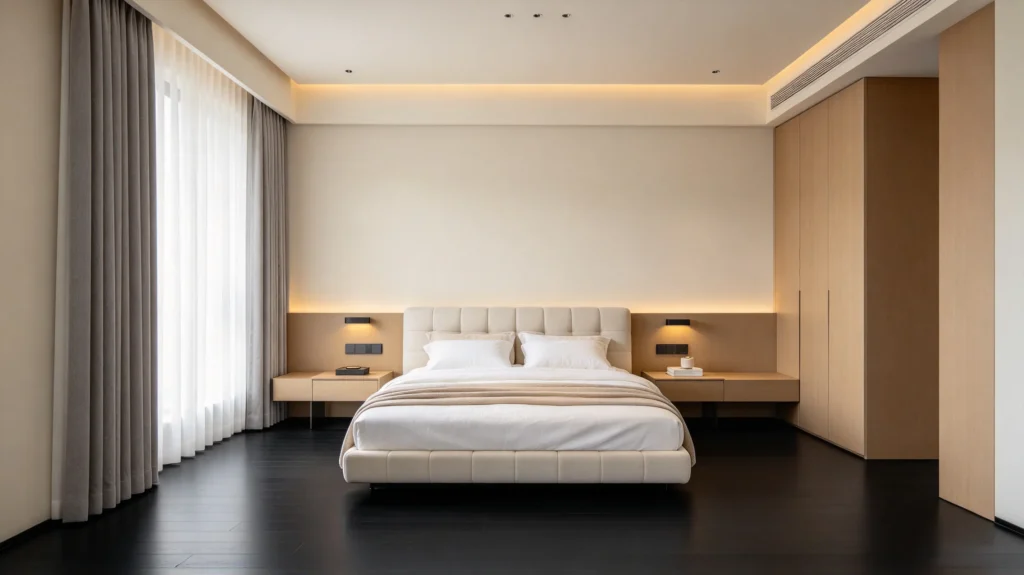
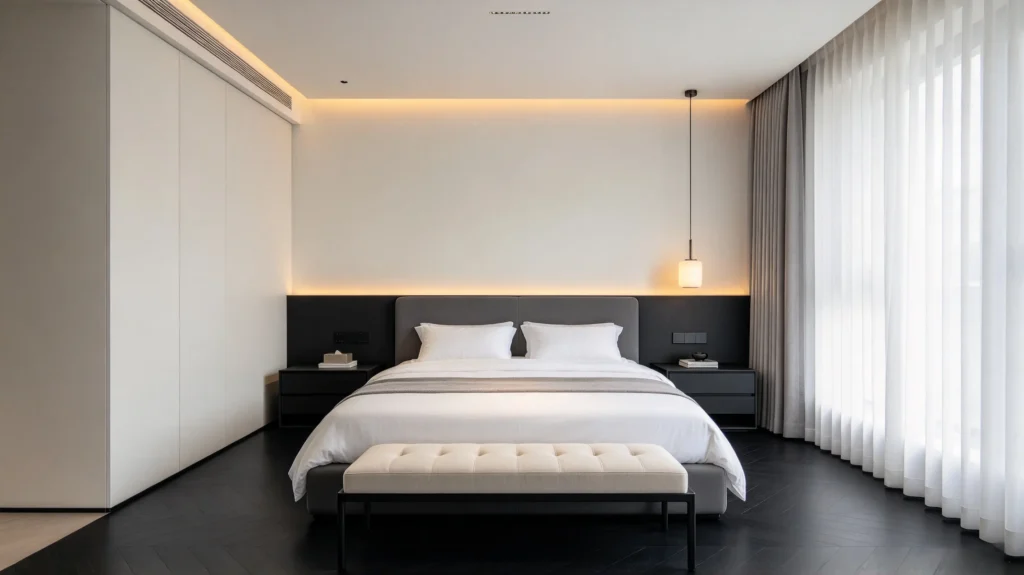
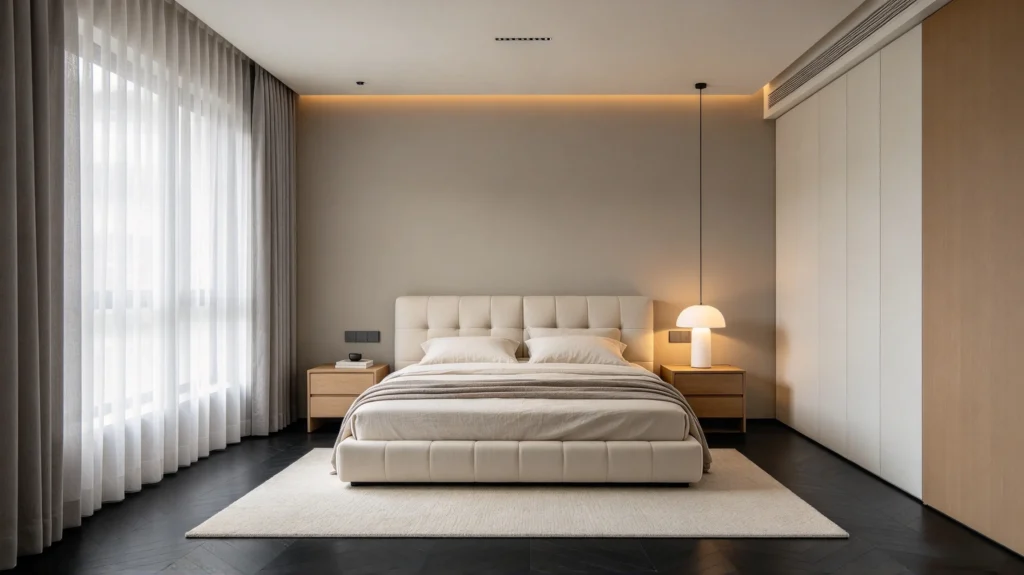
Black vinyl flooring can give a minimalist bedroom a calm, structured appearance. The key is to avoid making every major surface equally dark.
Pair the floor with a light upholstered bed, white or beige bedding, and restrained furniture. Soft gray curtains and warm bedside lighting can add depth without introducing too many colors.
For a more dramatic bedroom, a dark headboard or black-framed bedside tables can echo the flooring. Keep the remaining surfaces relatively light so the room retains a sense of balance.
Design tip: Layer different textures, such as linen bedding, upholstered furniture, and a soft rug, to prevent a restrained color palette from feeling flat.
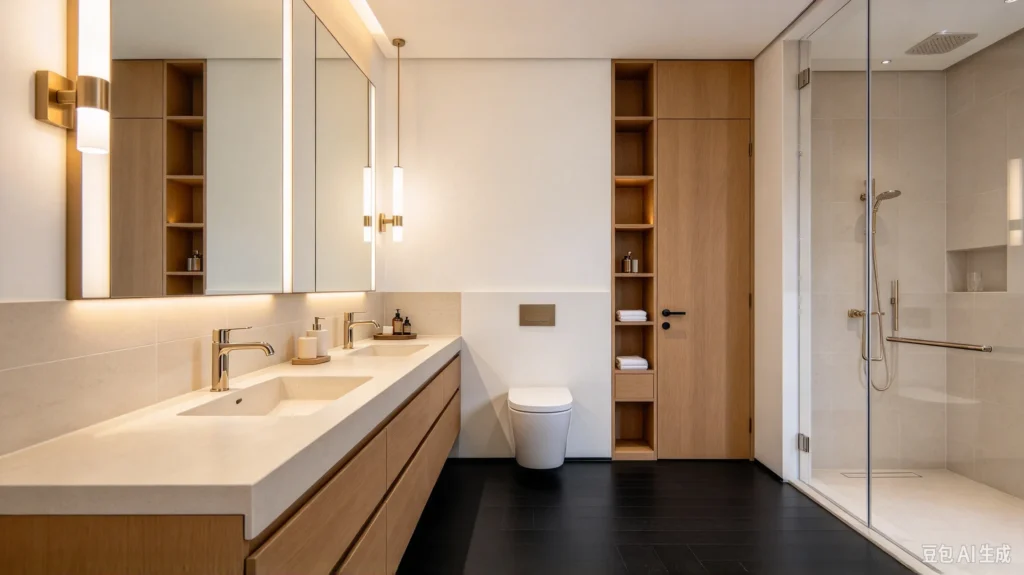
5. Give a Contemporary Bathroom a Bold Foundation
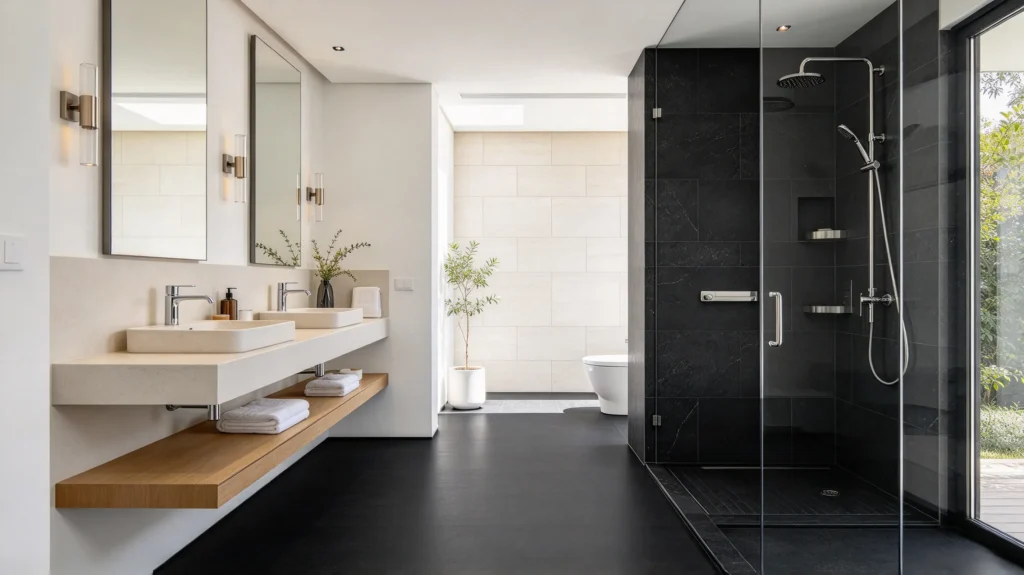
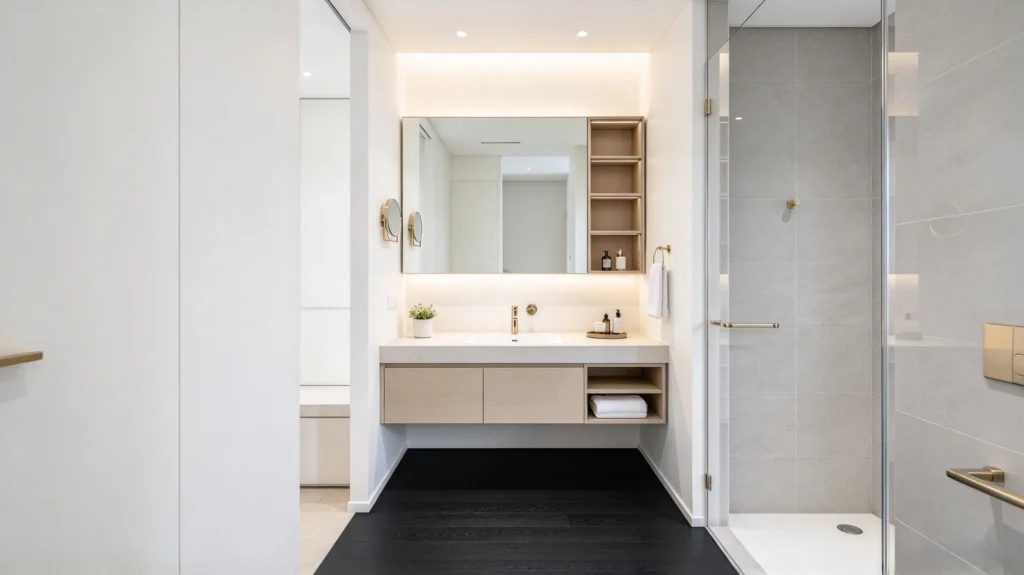
Black vinyl flooring can create a striking foundation in a contemporary bathroom when the selected product is specifically suitable for the intended wet-area application.
Combine the floor with a light vanity, white walls, and simple fittings for a crisp, modern look. Brushed metal details and warm wood accents can make the space feel less stark.
A black stone-look finish may complement large-format wall tiles, while a more subtle pattern can suit a smaller bathroom with limited decorative elements.
Design tip: Check the flooring manufacturer’s specifications for water exposure, slip resistance, and installation requirements before choosing a product for a bathroom. Water-resistant material alone does not guarantee that the complete installed floor system is waterproof.
6. Create an Industrial Interior with Black Vinyl Flooring
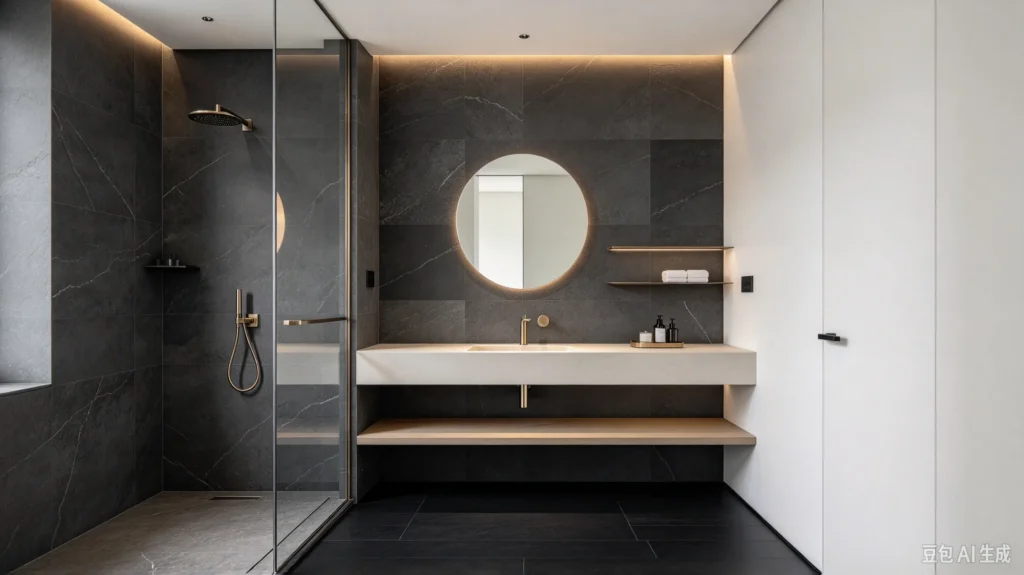
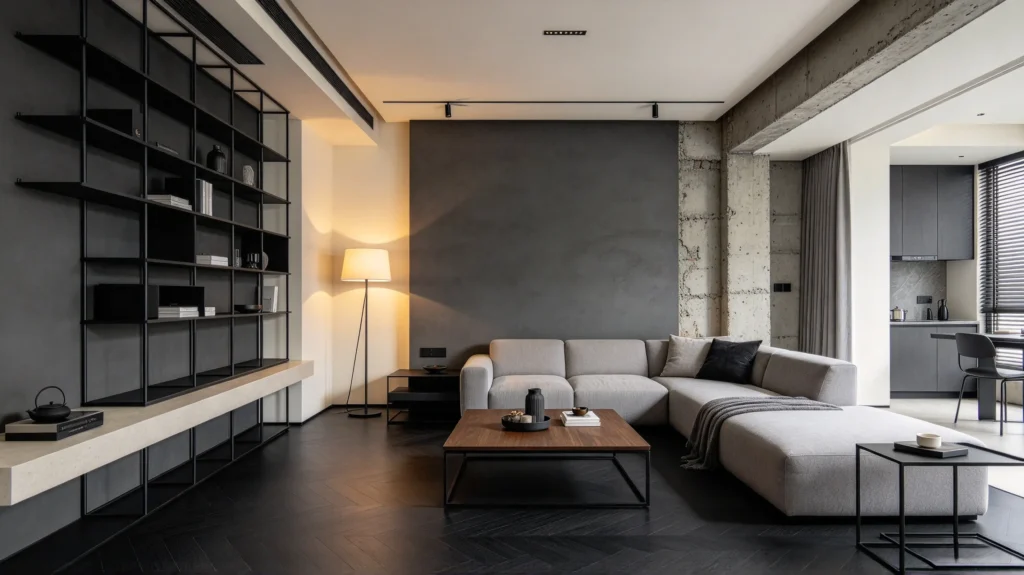
Black vinyl flooring can complement industrial interiors featuring metal frames, exposed concrete finishes, and simple architectural details.
Pair it with charcoal walls, black metal shelving, and wood furniture to create a layered palette of dark and natural materials. To avoid an overly heavy appearance, introduce lighter surfaces through a countertop, sofa, artwork, or selected wall sections.
A matte or concrete-inspired visual may suit this style, while black wood-look planks can create a warmer interpretation of industrial design.
Design tip: Use a combination of matte surfaces and textured materials instead of relying on several glossy black finishes.
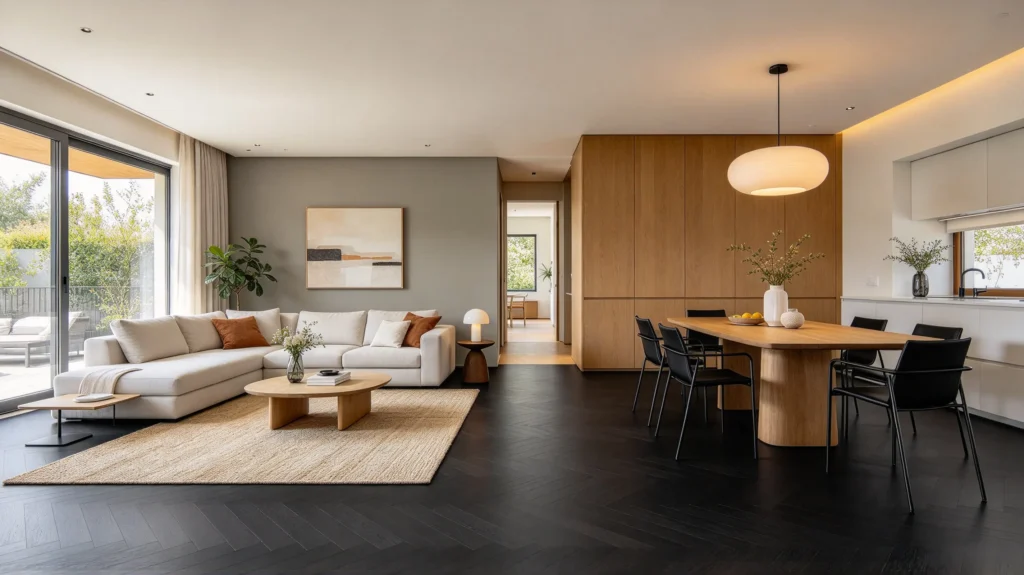
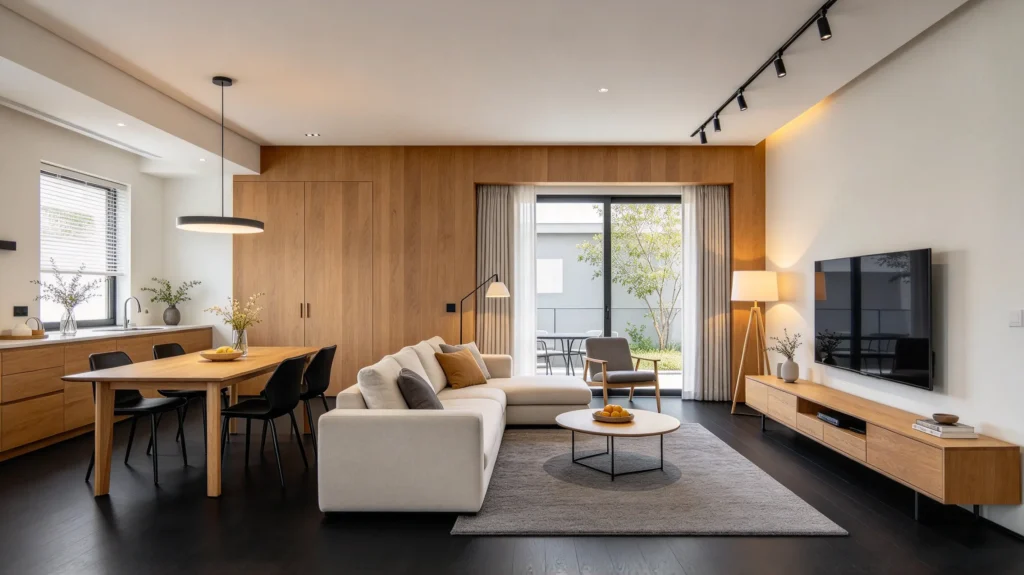
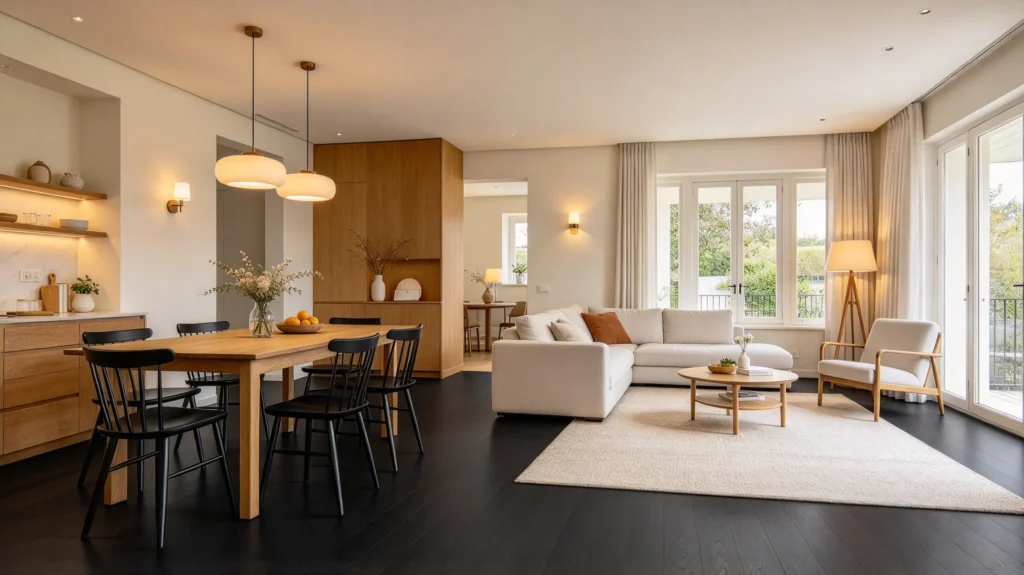
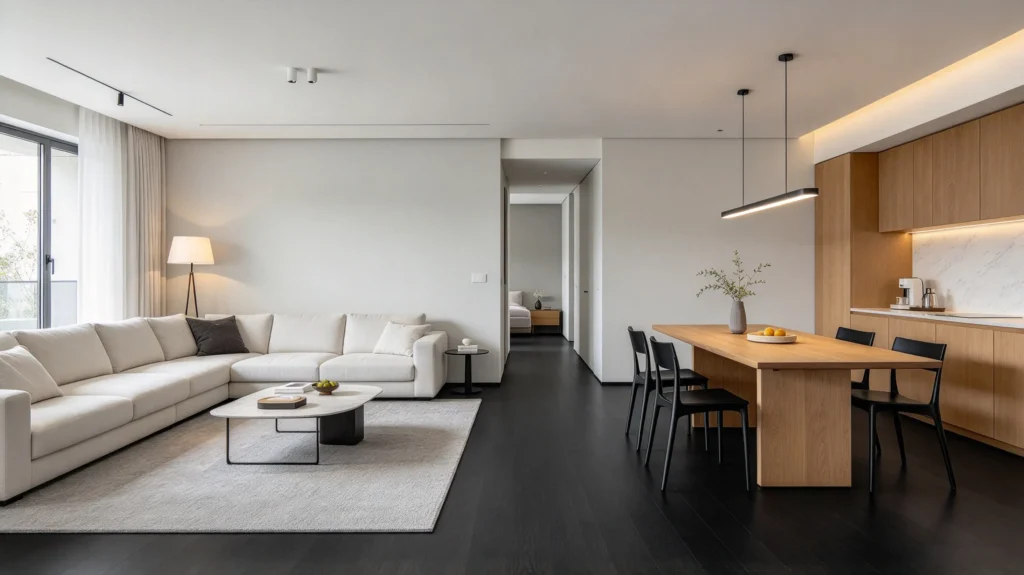
7. Connect an Open-Plan Living and Dining Area
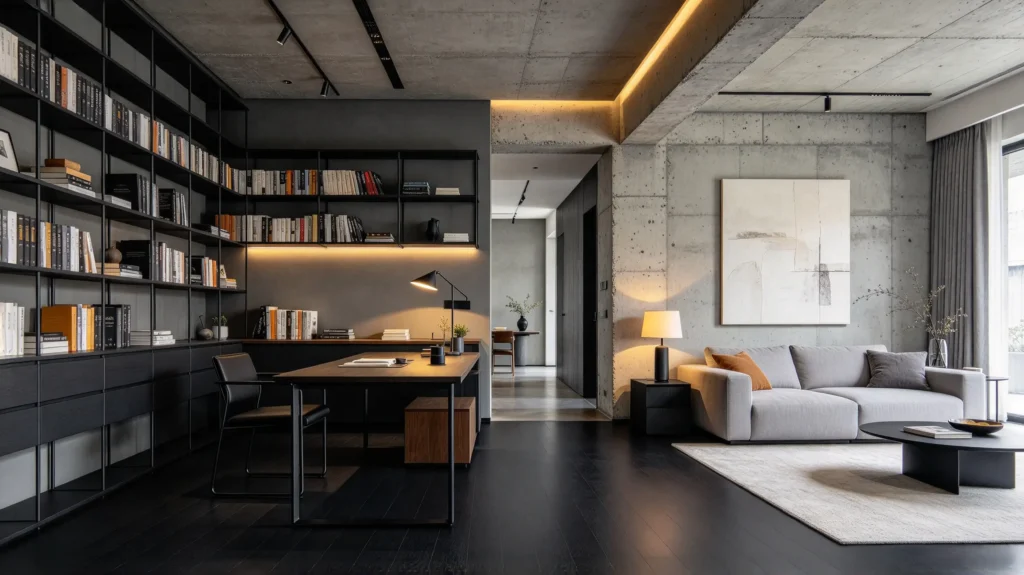
In an open-plan layout, black vinyl flooring can help create a continuous visual foundation across the living and dining areas.
Pair the floor with a consistent wall color and coordinate the furniture finishes across both zones. For example, a light sofa, oak dining table, and black dining chairs can establish a unified palette without making the two areas look identical.
If the space is large, rugs, lighting, and furniture placement can distinguish the living and dining zones while the flooring connects them.
Design tip: Consider plank direction, room proportions, and transitions between floor coverings during installation planning. A consistent floor appearance is easiest to achieve when the layout is planned before the furniture is placed.
8. Soften Black Vinyl Flooring with Beige and Cream Interiors
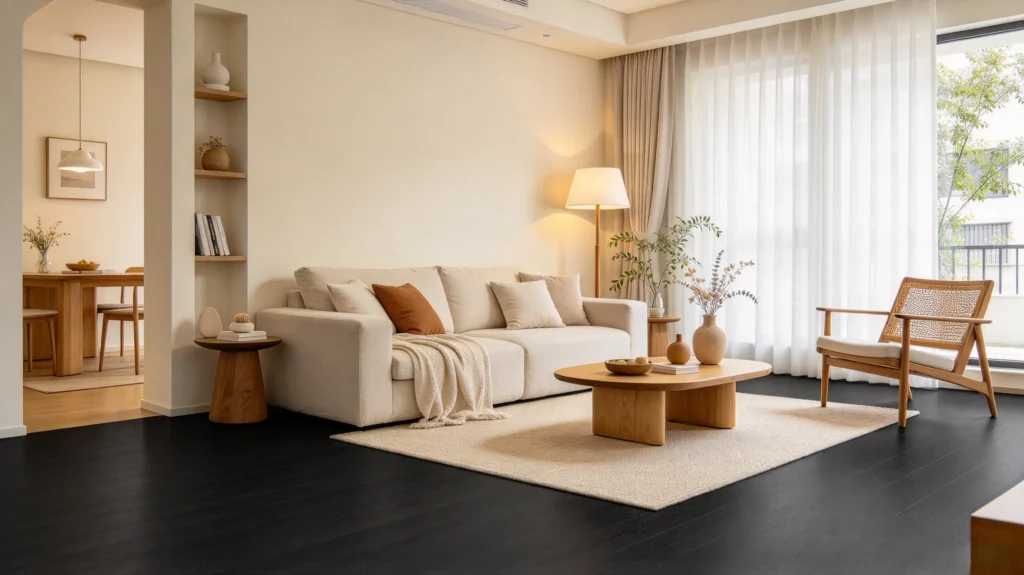
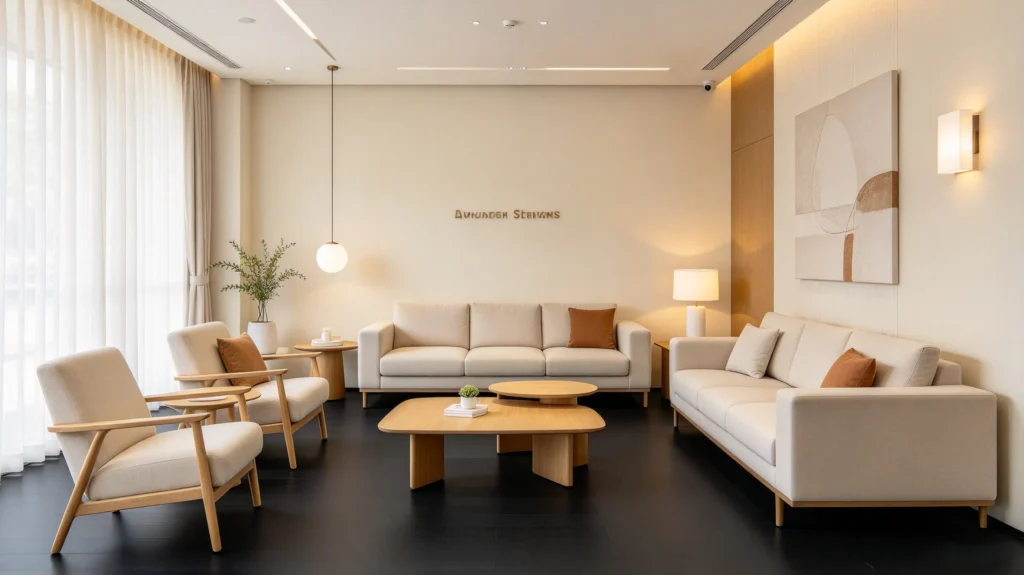
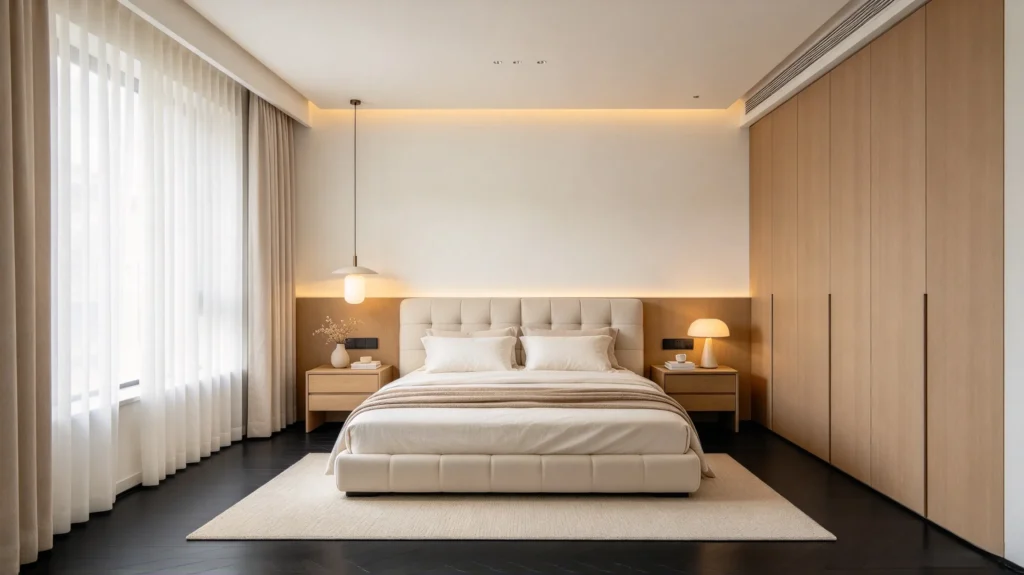
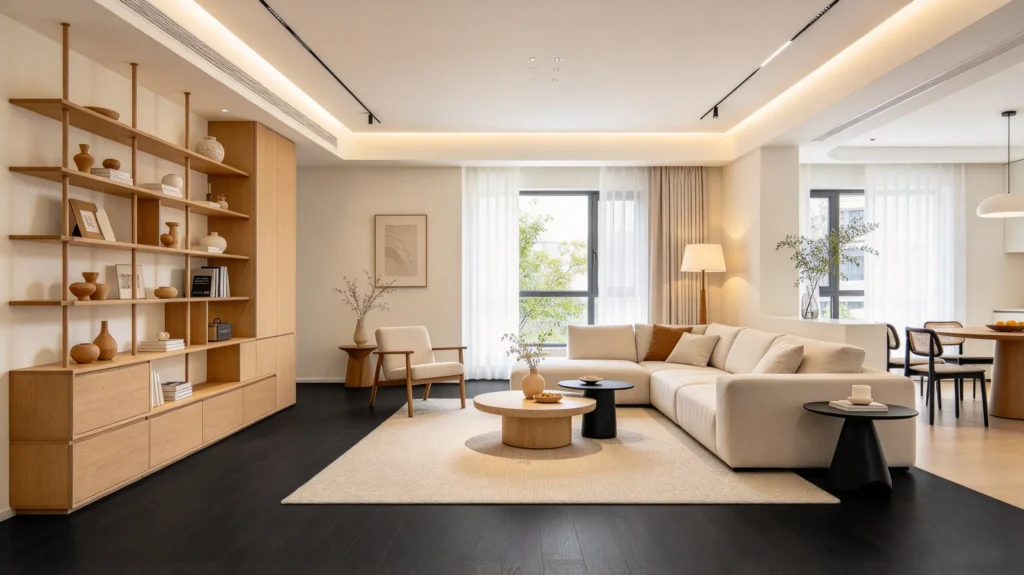
Black flooring does not have to produce a high-contrast, monochromatic room. Beige, cream, and warm white can soften its appearance and create a more relaxed interior.
Consider cream walls, a beige sofa, pale curtains, and natural wood accessories. The dark floor provides definition, while the warm neutrals prevent the overall design from feeling too stark.
This combination is suitable for living rooms, bedrooms, reception areas, and other spaces where a contemporary look needs to feel welcoming.
Design tip: Use several related neutral shades rather than relying on one flat beige color. Small differences in fabric, wood, and wall finishes add depth to the room.
9. Pair Black Vinyl Flooring with Gray Walls
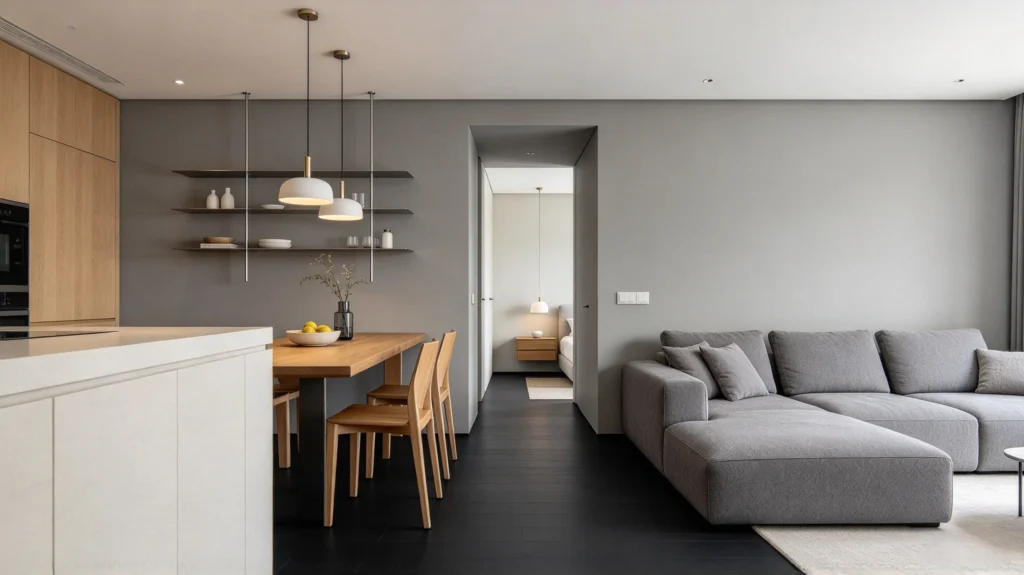
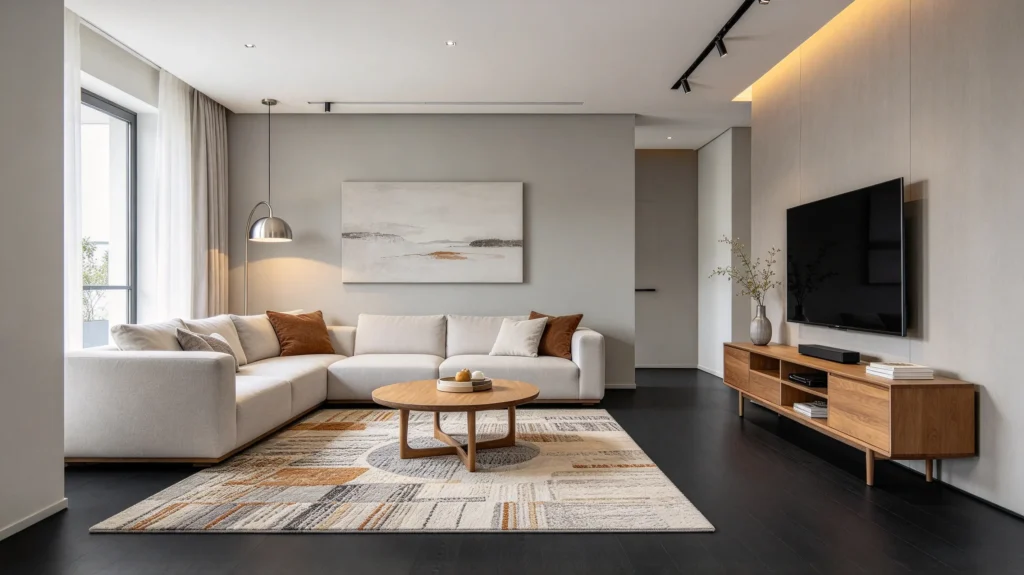
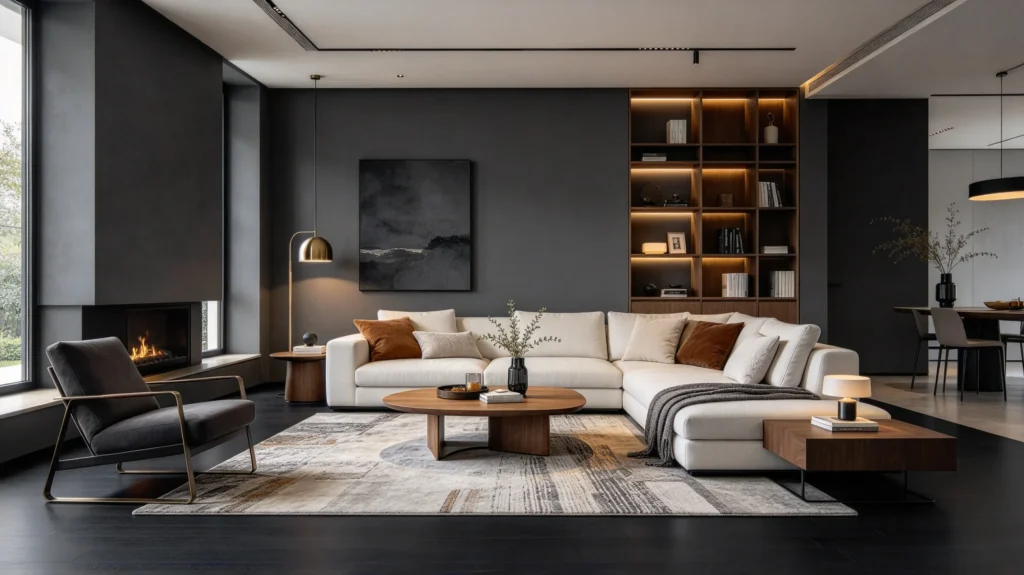
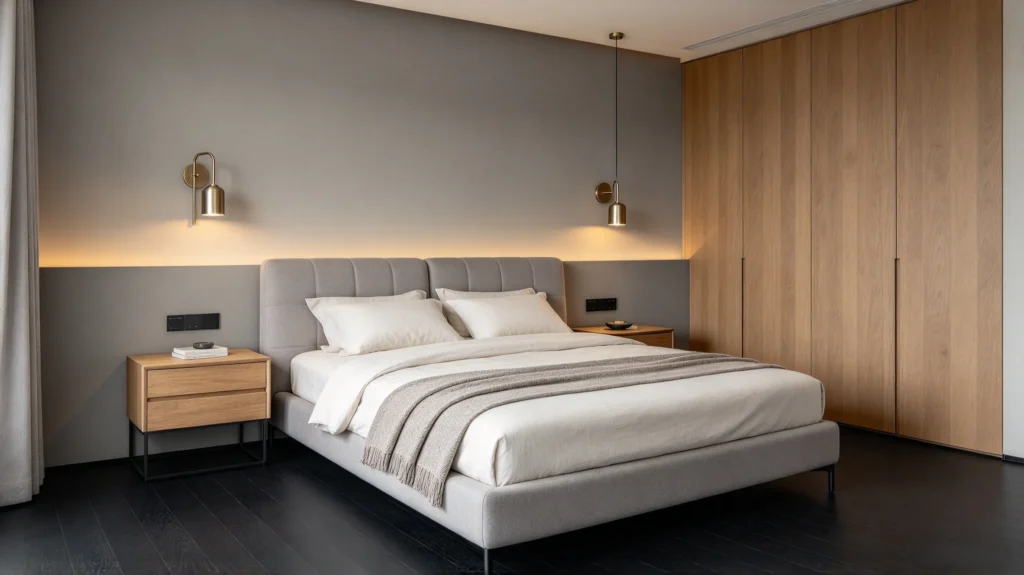
Gray walls and black vinyl flooring create a restrained, contemporary color scheme. The result depends on the undertones and lightness of the gray, as well as the texture of the flooring.
Light gray walls can provide contrast and keep the room feeling open. Medium gray introduces a more understated transition between the floor and the walls, while charcoal gray creates a darker, more dramatic interior.
To prevent the palette from appearing monotonous, introduce materials such as natural wood, textured upholstery, or brushed metal.
Design tip: Test wall paint and flooring samples together under the room’s actual lighting. Cool gray and warm gray can produce noticeably different results beside a black floor.
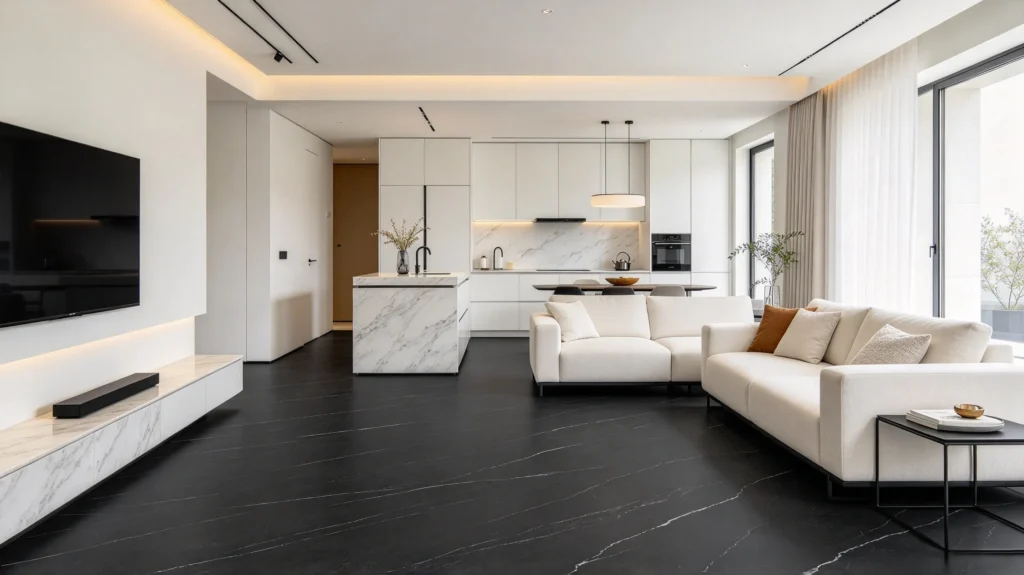
10. Choose Black Stone-Look Vinyl for a Refined Interior
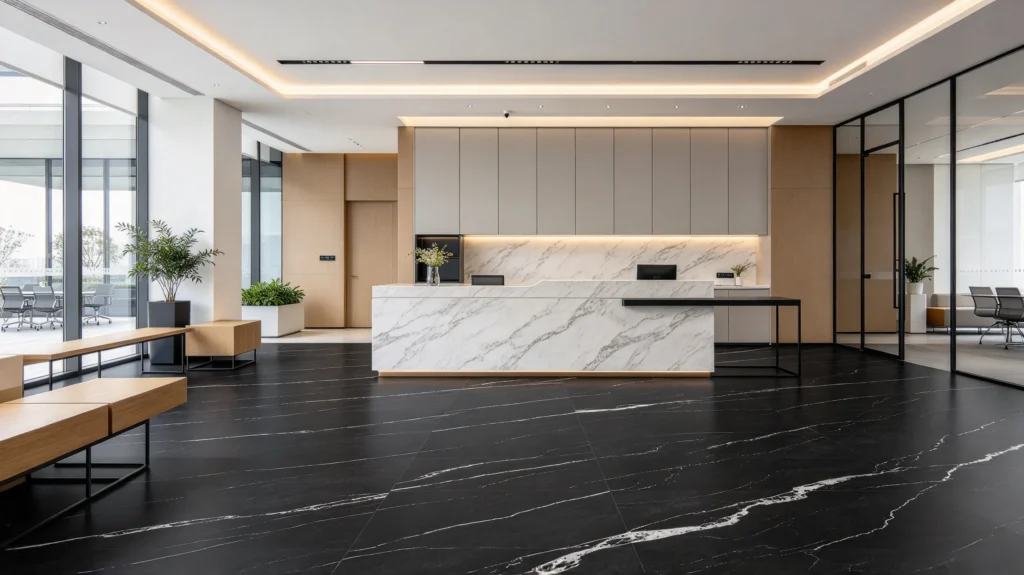
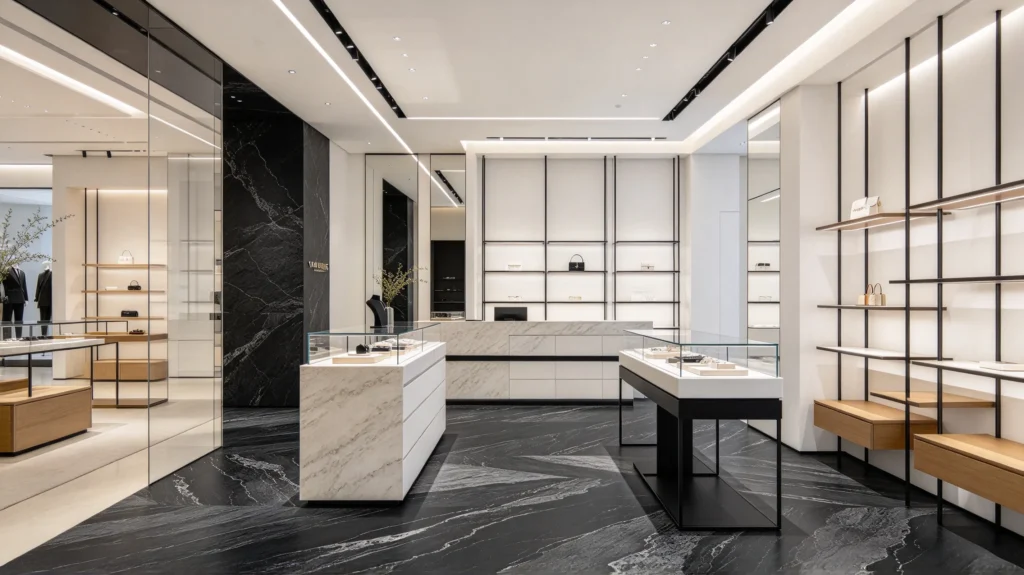
Black stone-look vinyl flooring can suit interiors that call for a clean, architectural appearance. Depending on the product design, subtle veining or a low-contrast pattern can add visual interest without dominating the room.
Pair it with a light stone-look countertop, simple cabinetry, and restrained decorative details. In commercial interiors, the same approach can work in reception areas, meeting spaces, and retail environments.
The scale of the pattern matters. A subtle design may create a more continuous appearance in a small room, while a more pronounced pattern can become a feature in a larger space.
Design tip: If the floor already has visible veining or texture, keep other large patterns relatively simple to avoid competing visual elements.
11. Use Black Wood-Look Vinyl Plank Flooring for Added Texture
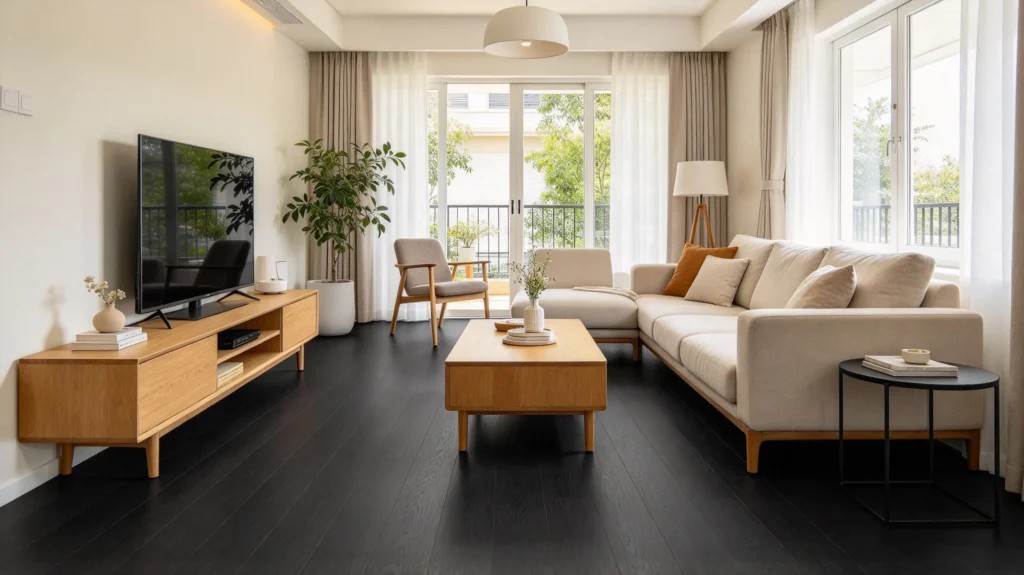
Black wood-look vinyl plank flooring combines a dark color with the linear appearance of wood grain. This can make the floor more visually detailed than a uniform black surface.
It works with contemporary, industrial, and minimalist interiors. Pair it with light walls and warm wood furniture for contrast, or use charcoal upholstery and black metal details for a more cohesive dark palette.
The plank layout also influences the result. Depending on the room’s proportions and installation conditions, plank direction can emphasize the length or width of the space.
Design tip: Compare the grain pattern, surface texture, and plank variation before choosing a design. Some products have a subtle dark wood appearance, while others create a more pronounced, rustic effect.
12. Apply Black Vinyl Flooring in Offices and Commercial Spaces
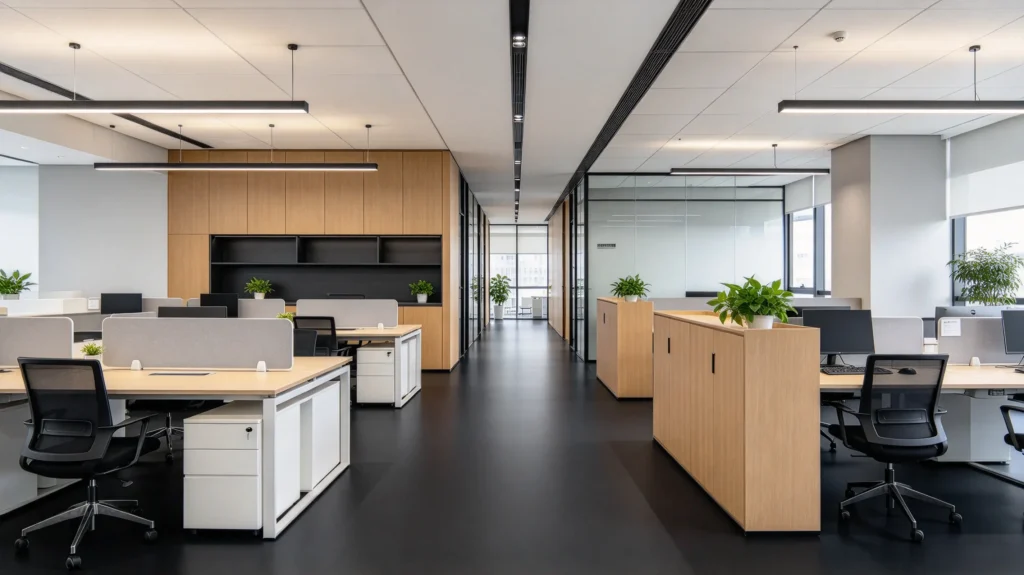
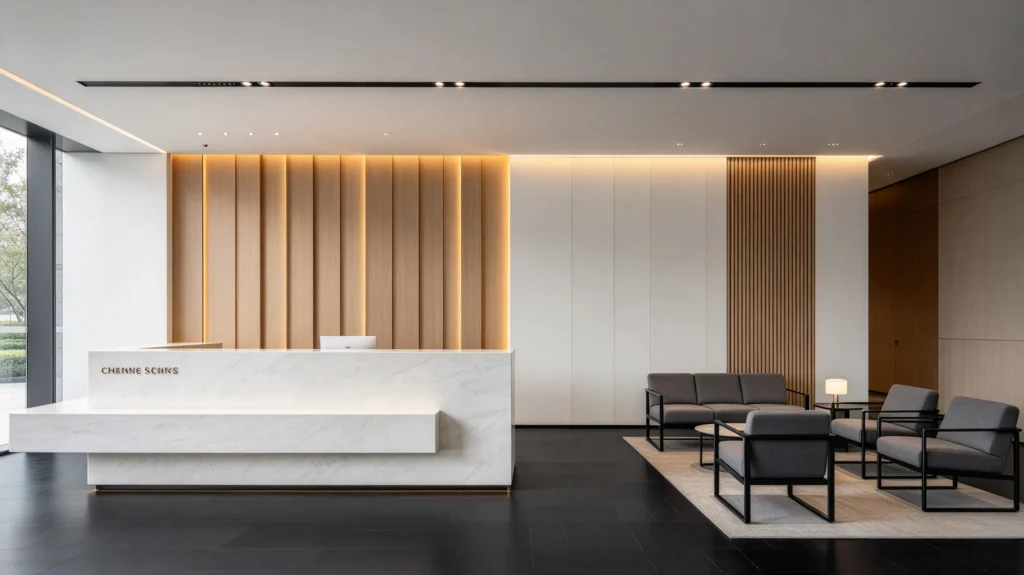
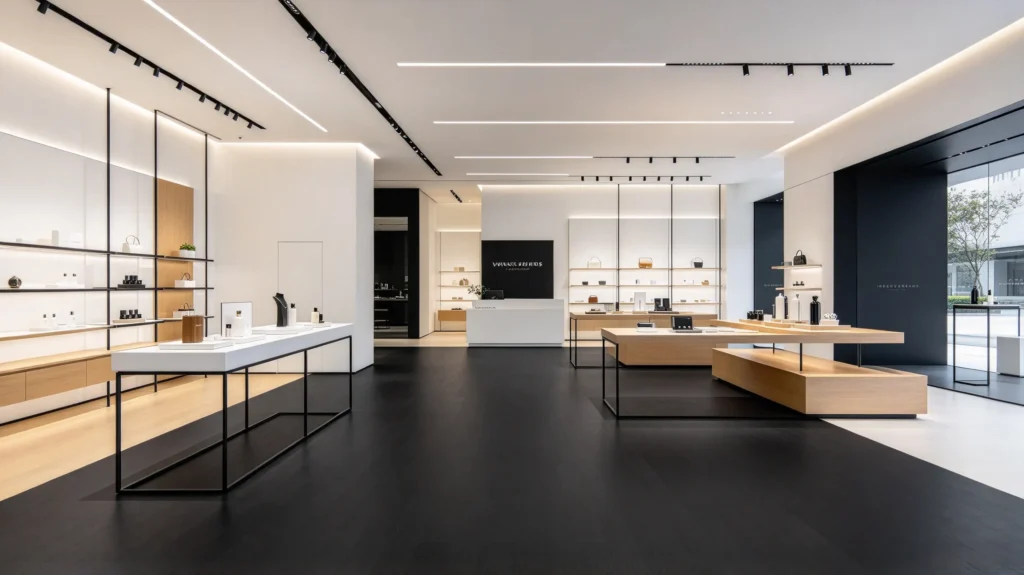
Black vinyl flooring can help establish a professional, contemporary appearance in offices, reception areas, showrooms, and selected retail interiors.
In an office, pair it with light desks, neutral walls, and warm wood details. In a reception area, a dark floor can provide contrast against a light reception counter and a simple feature wall. Retail spaces can use black flooring to create a backdrop for product displays, provided the overall lighting remains appropriate.
Commercial projects require more than visual coordination. Foot traffic, cleaning routines, installation conditions, and the flooring’s performance specifications all affect product selection.
Design tip: Confirm that the selected flooring is rated for the intended application and expected traffic. Appearance should support the design, but suitability must be established from the product’s technical information.
What Colors Go Well with Black Vinyl Flooring?
Black vinyl flooring is versatile, but the surrounding colors determine whether the room feels bright, warm, dramatic, or understated.
White and Cream for Contrast
White and cream surfaces create a clear contrast against black flooring. White suits crisp, modern interiors, while cream and warm white produce a softer effect.
These colors work particularly well for kitchen cabinets, walls, sofas, bedding, and bathroom vanities.
Natural Wood for Warmth
Oak, walnut, and other natural wood tones can balance the visual weight of a dark floor. Lighter wood creates a brighter contrast, while deeper brown tones produce a richer, more unified palette.
Repeat the chosen wood tone across furniture, shelving, or decorative details to create a connected design.
Gray for a Contemporary Look
Gray walls, furniture, and accessories can complement black flooring in modern interiors. Light gray keeps the palette relatively open, while charcoal gray creates a more dramatic atmosphere.
Vary the tones and textures to maintain visual separation between the floor, walls, and furniture.
Brass and Warm Metallic Accents
Warm metallic details can introduce contrast without adding another dominant color. Brass handles, bronze-colored lighting, and selected metal accessories can work particularly well with black flooring and natural wood.
Use these finishes selectively. A few coordinated details usually create a more consistent look than mixing several competing metallic tones.
What to Consider Before Choosing Black Vinyl Flooring
1. Room Size and Natural Light
Black flooring can make a room feel more enclosed when combined with dark walls, heavy furniture, and limited lighting. This does not mean it should only be used in large spaces.
In smaller rooms, balance the floor with lighter walls, reflective surfaces, and carefully placed lighting. In larger spaces, darker furniture and wall colors may be easier to incorporate without overwhelming the interior.
2. Finish and Surface Pattern
The finish affects how black vinyl flooring looks under different lighting conditions.
- Matte finishes: Offer a more understated appearance and can suit minimalist or industrial interiors.
- Glossy finishes: Reflect more light and create a more polished look, although reflections may make surface marks more noticeable.
- Wood-look finishes: Introduce grain and linear texture, making them suitable for interiors that need a warmer appearance.
- Stone-look finishes: Provide a more architectural aesthetic and can complement contemporary kitchens, bathrooms, and commercial spaces.
The actual appearance varies by product, so review samples under the lighting conditions in which the flooring will be used.
3. Dust, Footprints, and Routine Cleaning
Black flooring can make certain types of dust, lint, light-colored debris, and surface marks more noticeable, particularly on smooth or glossy finishes. Actual visibility depends on the finish, surface texture, lighting, and the type of dirt.
Regular sweeping or vacuuming with a suitable floor attachment, followed by cleaning according to the manufacturer’s instructions, helps maintain the appearance.
For busy homes and commercial interiors, consider how frequently the floor can be cleaned and whether the chosen finish will suit the expected maintenance routine.
4. Product Specifications and Intended Use
Color and appearance should not be the only selection criteria. Before choosing black vinyl flooring, review the product’s construction and technical specifications.
Important considerations include:
- Intended residential or commercial application
- Wear layer and surface treatment
- Water-resistance claims and installation limitations
- Slip-resistance information where relevant
- Subfloor preparation and installation method
- Cleaning and maintenance requirements
The right product depends on the space, expected use, and installation conditions. A floor suitable for a bedroom may not be appropriate for a busy commercial entrance or a wet area.
Is Black Vinyl Flooring a Good Choice?
Black vinyl flooring is a good option for interiors that need contrast, definition, or a contemporary foundation. It can suit a wide range of styles, from bright black-and-white kitchens to warm oak-accented living rooms and minimalist commercial spaces.
The best result comes from balancing the dark floor with suitable lighting, complementary materials, and a finish that matches the room’s intended use. By considering both the design and the product specifications, you can choose black vinyl flooring that works visually and practically for your project.
Looking for black vinyl flooring for your project? Contact timmy.wu@timotechs.com to discuss your flooring requirements and explore suitable options.