In modern building design, noise control has become an increasingly important factor affecting comfort, productivity, and overall spatial quality. Whether in residential apartments, commercial offices, or public institutions, impact sound from footsteps and movement can significantly influence the user experience.
Acoustic vinyl flooring has emerged as a widely adopted solution to address these challenges. Unlike standard flooring materials, it is designed as a system-based structure that combines surface durability with integrated sound reduction performance.
This guide explains how acoustic vinyl flooring works, its structure, performance characteristics, and how to select the right system for different applications.
What Is Acoustic Vinyl Flooring?
Acoustic vinyl flooring is not a single material, but a multi-layer flooring system designed to reduce impact sound transmission between floors.
It is typically based on a vinyl flooring structure enhanced with an acoustic backing layer or underlayment system that absorbs and disperses sound energy.
Compared to standard vinyl flooring, the key difference is:
- Standard vinyl flooring focuses on surface performance (durability, water resistance, design)
- Acoustic vinyl flooring integrates sound reduction functionality within the structure
This makes it particularly suitable for multi-level buildings where noise transmission is a concern.
In many modern construction projects, acoustic vinyl flooring is used as part of a broader flooring system strategy rather than as an isolated material choice.
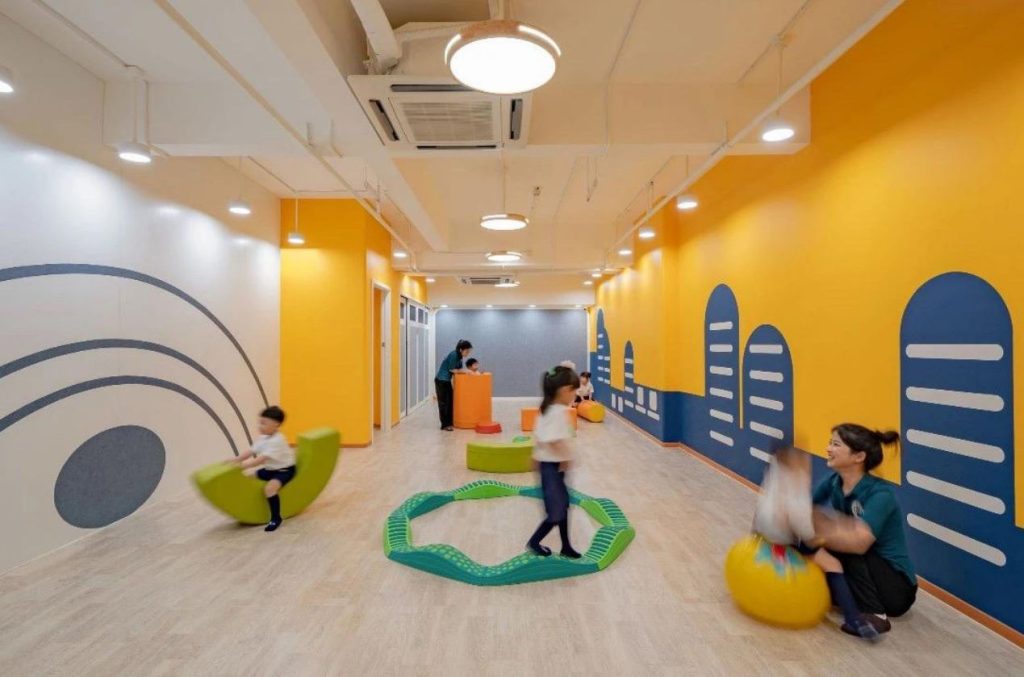
How Acoustic Vinyl Flooring Reduces Impact Sound
To understand acoustic performance, it is important to distinguish between different types of sound in buildings:
- Impact sound: generated by physical contact (footsteps, dropped objects)
- Airborne sound: transmitted through air (speech, music)
Acoustic vinyl flooring is primarily designed to reduce impact sound transmission, which is one of the most common noise issues in multi-story buildings.
Sound Absorption Layer Structure
The acoustic performance of vinyl flooring is achieved through specialized structural layers.
A typical system may include:
- Wear layer (surface protection against scratches and abrasion)
- Vinyl core layer (provides structural stability)
- Acoustic backing layer (absorbs and disperses sound energy)
The acoustic layer plays a key role by reducing vibration transfer from the floor surface to the subfloor.
Material density and elasticity in this layer directly influence how effectively sound energy is absorbed.
Impact Sound vs Airborne Sound
Understanding this distinction is critical for flooring selection:
- Impact sound travels through structural elements (floors, slabs)
- Airborne sound travels through air and walls
Acoustic vinyl flooring systems are engineered mainly to reduce impact sound transmission between floors, making them highly suitable for apartments, offices, and institutional buildings.
Sound Reduction Performance (dB Reduction Concept)
Acoustic performance is often measured in terms of impact sound reduction (dB rating).
While performance varies depending on system structure, general influencing factors include:
- Thickness of acoustic layer
- Density of backing material
- Installation method (floating vs glued systems)
- Subfloor conditions
Rather than a fixed number, acoustic performance should be understood as a system outcome influenced by multiple structural elements working together.
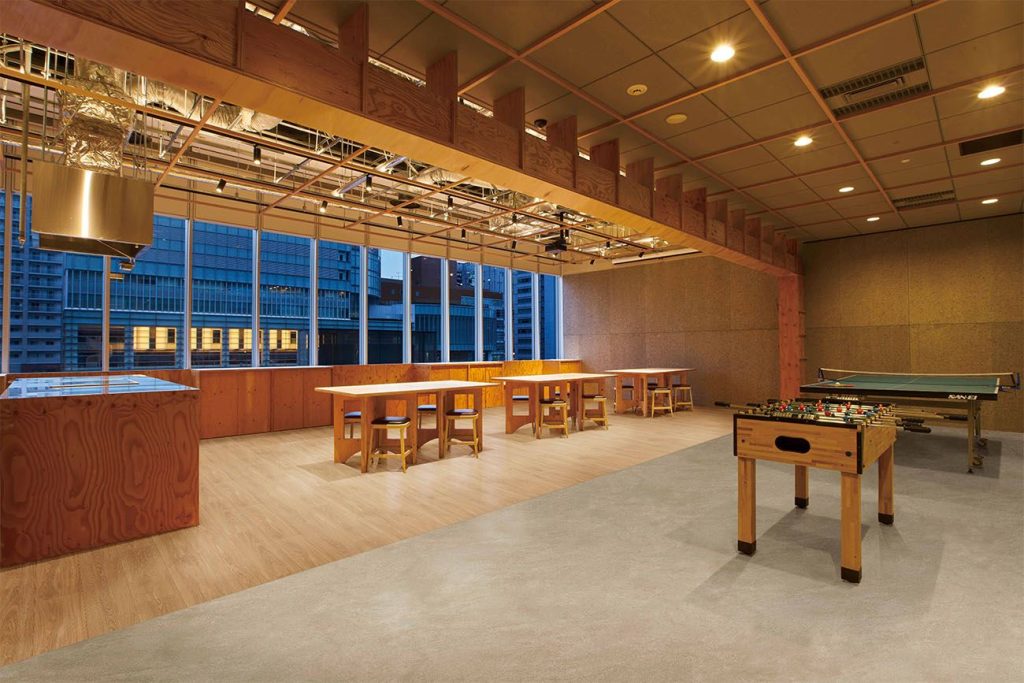
Acoustic Vinyl Flooring Structure System
The performance of acoustic vinyl flooring is determined by its layered construction.
Wear Layer (Surface Protection)
The top wear layer is responsible for:
- Scratch resistance
- Abrasion resistance
- Daily traffic durability
In commercial environments, wear layer thickness directly affects service life and maintenance requirements.
Vinyl Core Layer
The core layer provides:
- Dimensional stability
- Flexibility under load
- Structural balance between rigidity and comfort
This layer ensures the flooring maintains stability under temperature and humidity changes.
Acoustic Backing Layer
This is the defining component of acoustic vinyl flooring systems.
Its function includes:
- Absorbing impact vibrations
- Reducing sound transmission
- Improving walking comfort
Different formulations and densities of backing materials will produce different acoustic performance levels.
Optional Underlayment System
In some installations, an additional underlayment layer is used to enhance acoustic performance.
This is common in:
- Renovation projects
- Buildings with strict noise regulations
- Multi-residential developments
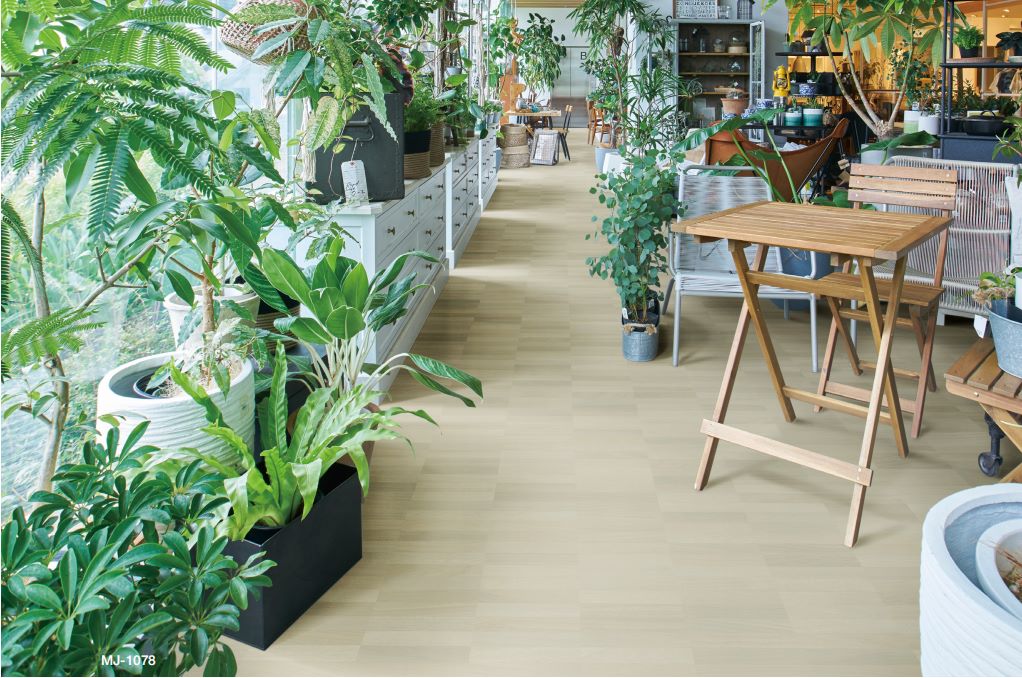
Technical Performance Characteristics
Beyond acoustic performance, vinyl flooring systems must also meet general performance requirements.
Durability and Wear Resistance
Acoustic vinyl flooring is widely used in commercial environments due to its:
- High abrasion resistance
- Surface protection technology
- Ability to handle high foot traffic
Performance depends primarily on wear layer quality and coating technology.
Water Resistance and Moisture Stability
Vinyl-based materials are inherently resistant to moisture.
This makes acoustic vinyl flooring suitable for environments such as:
- Residential spaces
- Commercial interiors
- Areas with occasional humidity exposure
However, installation quality remains critical to prevent subfloor moisture issues.
Thermal and Dimensional Stability
Temperature fluctuations can affect flooring expansion behavior.
Key considerations include:
- Expansion and contraction control
- Subfloor compatibility
- Proper installation spacing
These factors ensure long-term dimensional stability of the flooring system.
Indoor Air Quality Considerations
Modern acoustic vinyl flooring systems are typically designed with low-emission materials.
Key aspects include:
- VOC emission control
- Compliance with environmental standards
- Safe indoor application for residential and public buildings
Types of Acoustic Vinyl Flooring Systems
Acoustic vinyl flooring is not a single product format. It is a group of engineered flooring systems designed to meet different installation and performance requirements.
Understanding the main system types helps buyers select the most suitable solution based on building usage and acoustic expectations.
Acoustic Luxury Vinyl Tiles (LVT)
Acoustic LVT combines modular tile design with integrated sound reduction layers.
Key characteristics:
- Individual tile installation format
- Realistic wood and stone design options
- Built-in or attached acoustic backing
This system is commonly used in:
- Residential apartments
- Hotels and hospitality spaces
- Office interiors
Its modular nature also makes maintenance and partial replacement easier compared to sheet systems.
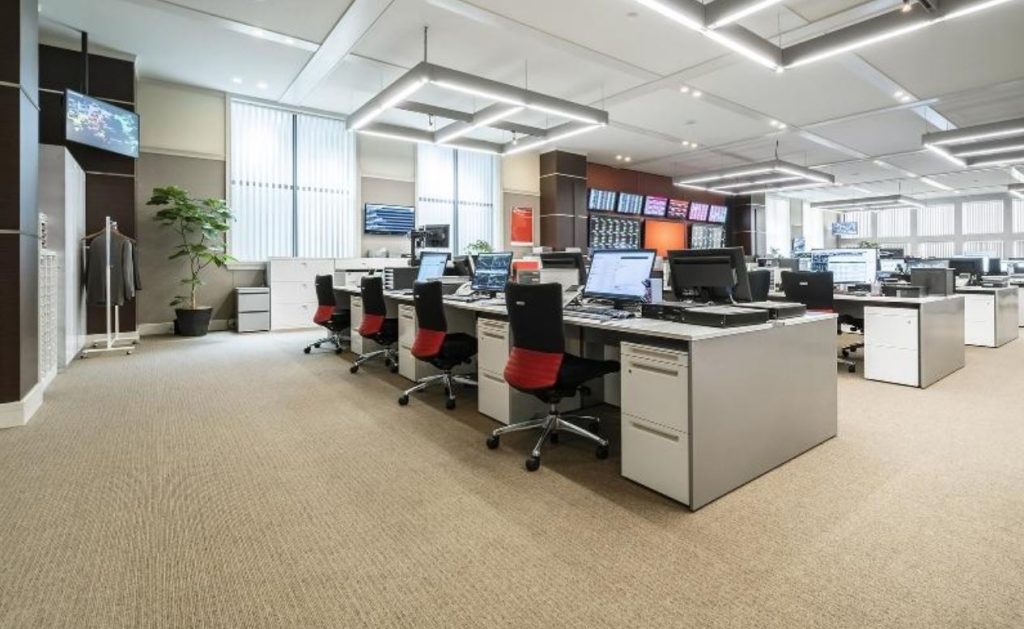
Acoustic Vinyl Plank Systems
Vinyl plank systems are designed to replicate natural wood flooring while providing acoustic performance.
Key features:
- Long plank format for natural wood appearance
- Click-lock or glue-down installation systems
- Acoustic layer integrated into backing or underlay
This type is widely used in:
- Residential living spaces
- Light commercial environments
- Renovation projects
Homogeneous Acoustic Vinyl Flooring
Homogeneous systems are made from a single consistent material layer throughout the product thickness.
Characteristics:
- High durability
- Long service life
- Suitable for heavy traffic environments
Acoustic performance is often achieved through specialized backing or subfloor systems rather than internal layering.
This system is commonly used in:
- Healthcare facilities
- Educational institutions
- Public buildings
Sheet Vinyl Acoustic Systems
Sheet vinyl provides continuous flooring coverage with minimal seams.
Key advantages:
- Seamless installation surface
- High hygiene performance
- Effective sound reduction with proper backing system
It is often selected for:
- Hospitals
- Laboratories
- Large commercial spaces
Applications of Acoustic Vinyl Flooring
Acoustic vinyl flooring is widely used across different building types due to its balance of durability, comfort, and noise reduction capability.
Residential Applications
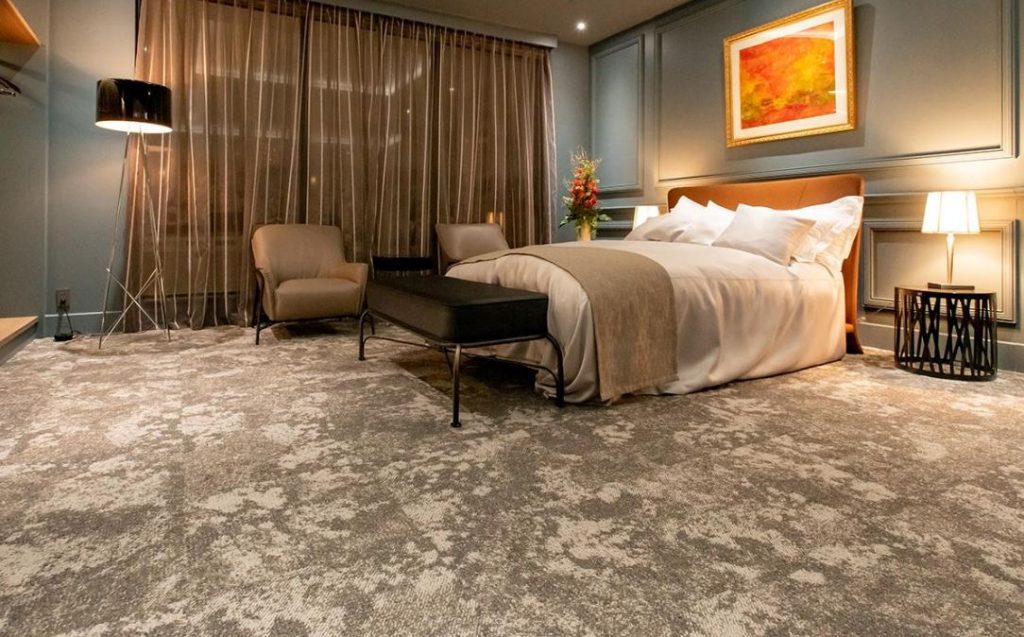
In residential environments, acoustic performance plays an important role in improving living comfort, especially in multi-story buildings.
Common applications include:
- Apartments and condominiums
- Bedrooms and living rooms
- Multi-level housing systems
The primary goal in residential use is reducing impact sound between floors to improve privacy and comfort.
Commercial Applications
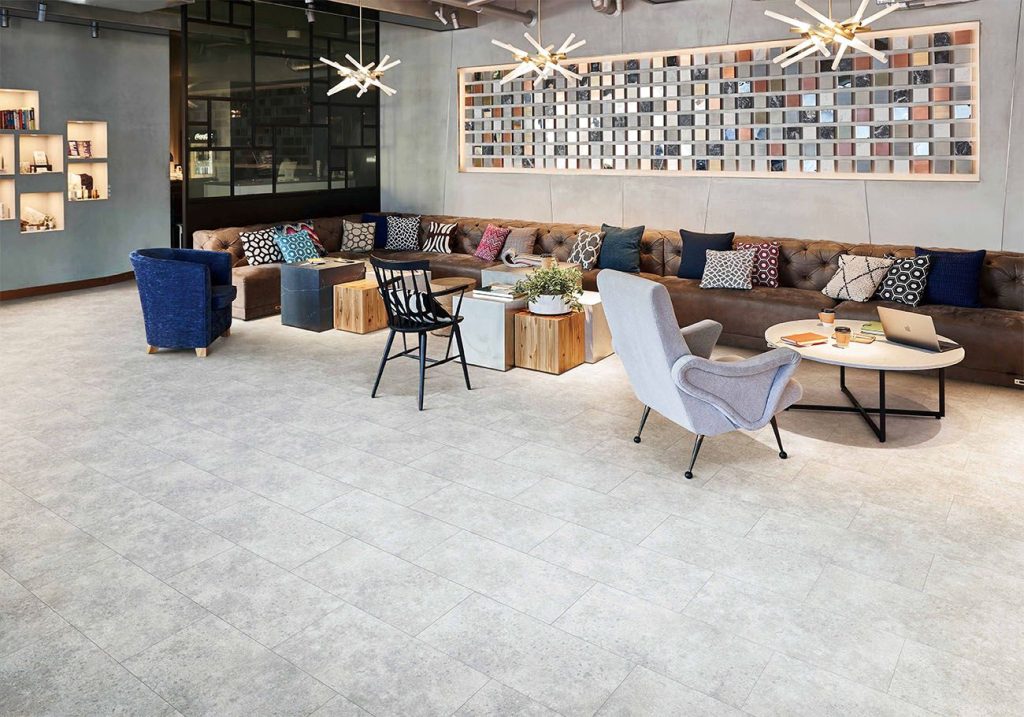
Commercial spaces require flooring systems that balance aesthetics, durability, and acoustic control.
Typical applications include:
- Office environments
- Retail spaces
- Hotels and service buildings
In these environments, acoustic flooring helps reduce ambient noise and improve working or customer experience.
Public and Institutional Buildings
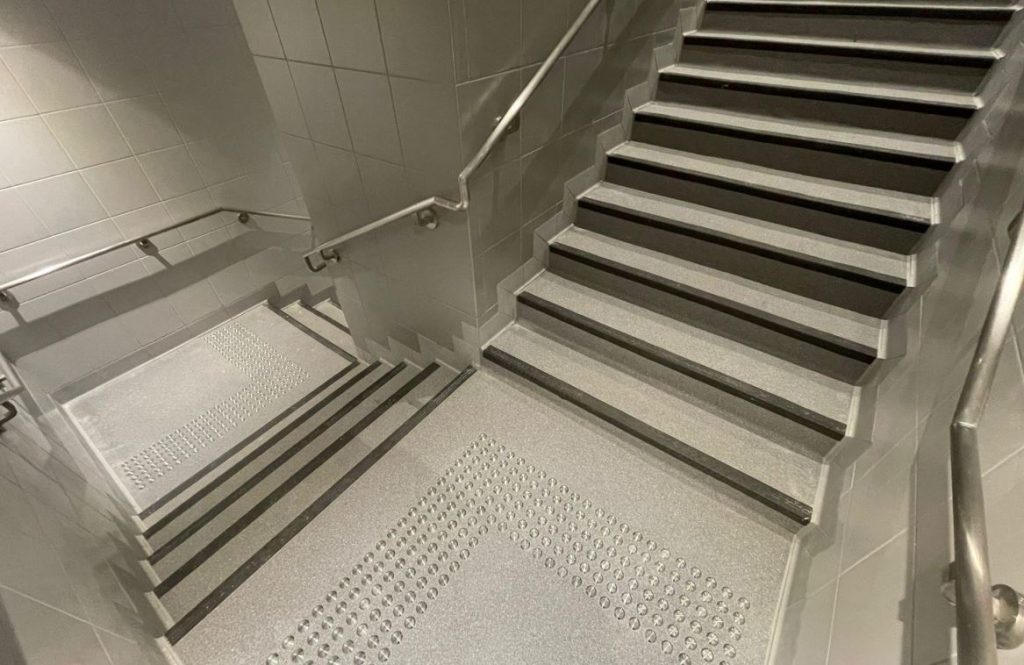
Public buildings often have strict acoustic and safety requirements.
Common usage scenarios:
- Schools and universities
- Hospitals and healthcare facilities
- Libraries and administrative buildings
In these cases, acoustic flooring contributes to both functional performance and regulatory compliance.
How to Select the Right Acoustic Vinyl Flooring
Choosing the right system depends on multiple technical and project-related factors rather than appearance alone.
By Acoustic Performance Requirement
Different projects require different levels of sound reduction:
- Low requirement: basic residential use
- Medium requirement: offices and retail
- High requirement: healthcare and multi-residential buildings
The required performance level influences both structure and material selection.
By Installation Environment
Environmental conditions affect system choice:
- Indoor dry environments
- High-traffic commercial zones
- Multi-storey residential buildings
Each environment places different demands on durability and acoustic efficiency.
By Structural System Type
Selection can also be based on system architecture:
- Integrated acoustic backing systems
- Separate underlayment systems
- Multi-layer engineered flooring systems
The choice depends on construction stage and acoustic target.
By Budget Level
While performance is the primary factor, budget also plays a role:
- Entry-level systems: standard acoustic backing
- Mid-range systems: reinforced multi-layer design
- Premium systems: advanced engineered acoustic solutions
Installation Considerations for Acoustic Vinyl Flooring
Proper installation is essential to achieve designed acoustic performance.
Subfloor Preparation
A stable subfloor is critical.
Requirements include:
- Flat and even surface
- Controlled moisture level
- Clean installation base
Poor subfloor conditions can reduce both acoustic and structural performance.
Expansion and Movement Control
Vinyl flooring expands and contracts with temperature changes.
Installation must consider:
- Expansion gaps along edges
- Room size limitations
- Environmental temperature stability
Installation Methods
Common installation systems include:
- Glue-down installation
- Click-lock floating systems
- Loose lay systems (specific applications)
Each method affects acoustic performance differently.
Common Installation Issues
Typical issues that can affect performance:
- Uneven subfloor causing sound leakage
- Incorrect joint alignment
- Missing or improper underlayment installation
Acoustic Vinyl Flooring vs Standard Vinyl Flooring
Understanding the difference helps clarify why acoustic systems are used in specific projects.
| Aspect | Standard Vinyl Flooring | Acoustic Vinyl Flooring |
|---|---|---|
| Structure | Single or simple layers | Multi-layer acoustic system |
| Sound performance | Limited | Designed for impact sound reduction |
| Application | General use | Multi-story and noise-sensitive environments |
| Comfort | Standard walking feel | Enhanced acoustic comfort |
The key difference lies in system structure rather than surface appearance.
Why System-Based Flooring Solutions Matter
In modern construction, flooring is no longer viewed as a single material layer, but as a complete system.
A well-designed flooring system combines:
- Surface durability
- Structural stability
- Acoustic performance
The final performance depends on how these layers work together, not just on individual material quality.
This is why many construction projects prefer working with manufacturers that can provide coordinated flooring systems rather than isolated products.
Conclusion
Acoustic vinyl flooring is ultimately about creating quieter, more comfortable spaces without compromising durability or design.
When the right system is selected and installed properly, it can make a noticeable difference in how a space feels and functions, especially in multi-level buildings where noise control matters most
About TIANAN
TIANAN Acoustic Vinyl Flooring is a multi-layer flooring system designed for durability, stability, and acoustic comfort in residential and commercial interiors.
Acoustic Vinyl Flooring helps reduce walking and impact noise by approximately 15–18 dB, supporting a quieter indoor environment.
If you are planning a project and need support in selecting suitable vinyl flooring, you can contact timmy.wu@timotechs.com for product specifications and technical guidance.