Peel and stick wallpaper has become one of the most popular solutions for quick and affordable interior upgrades. It is widely promoted as a simple, mess-free alternative to traditional wallpaper, making it especially appealing for renters and DIY users.
However, many real-world walls are far from perfect. Uneven surfaces, peeling paint, cracks, and other forms of wall damage are common—especially in older buildings or poorly prepared spaces.
This leads to a critical question:
Does peel and stick wallpaper actually work on uneven or damaged walls?
The short answer is: not reliably.
In this guide, we will take a practical, experience-based look at how peel and stick wallpaper works, why wall conditions matter so much, what problems you are likely to encounter, and what better solutions you should consider before making a purchase.
What Is Peel and Stick Wallpaper?
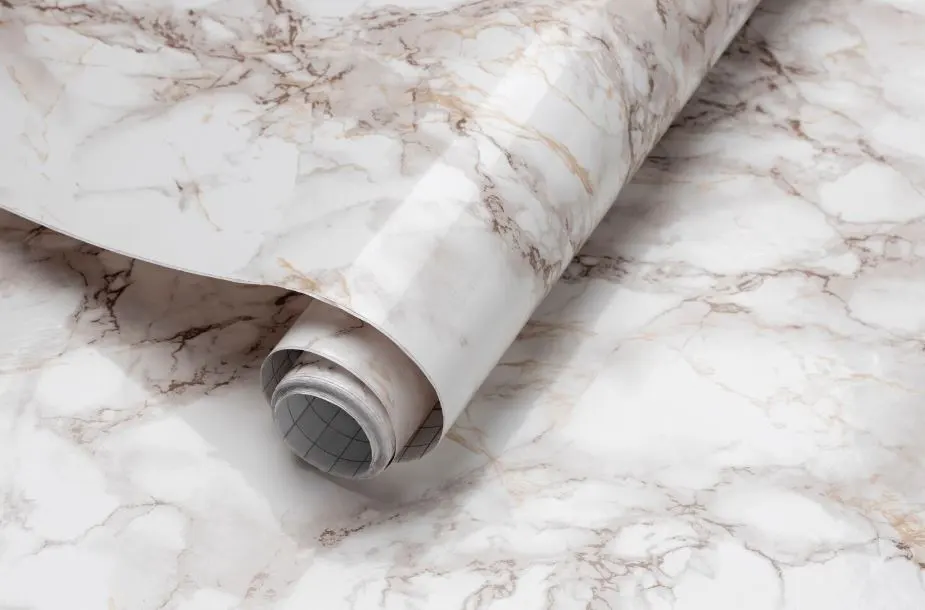
Peel and stick wallpaper, also known as self-adhesive wallpaper or removable wallpaper, is a type of wall covering that comes with a pre-applied adhesive backing. Unlike traditional wallpaper, it does not require paste or additional glue during installation.
How It Works
The adhesive used in peel and stick wallpaper is typically a pressure-sensitive adhesive (PSA). This type of adhesive forms a bond when pressure is applied to a surface.
For this bond to work effectively, three conditions are essential:
- The surface must be clean
- The surface must be dry
- The surface must be smooth and even
When these conditions are met, the wallpaper can adhere evenly and maintain a stable bond over time.
Common Types of Peel and Stick Wallpaper
- Vinyl-based wallpaper
Durable, water-resistant, and commonly used in kitchens or bathrooms - Fabric-backed wallpaper
Thicker material that is easier to reposition during installation - Thin decorative films
Lightweight and cost-effective, but less forgiving on imperfect surfaces
Why It’s Popular
Peel and stick wallpaper is widely used because it offers:
- Easy DIY installation
- No need for glue or specialized tools
- Removability without permanent damage (under ideal conditions)
- A wide range of colors, textures, and patterns
What Are Uneven or Damaged Walls?
To understand whether peel and stick wallpaper will work, it is important to clearly define what qualifies as uneven or damaged walls.
Uneven Walls
Uneven walls refer to surfaces that are not flat or consistent. These irregularities may be subtle or highly visible.
Common examples include:
- Rough plaster finishes
- Poor surface leveling during construction
- Small bumps or surface inconsistencies
- Light to moderate wall texture
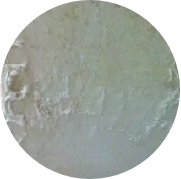
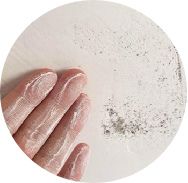
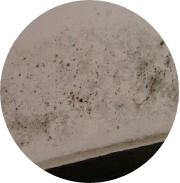
Damaged Walls
Damaged walls are surfaces where the structure or finish has deteriorated over time.
Typical issues include:
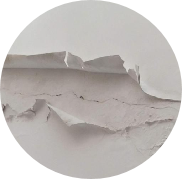
- Peeling or flaking paint
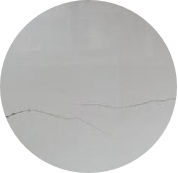
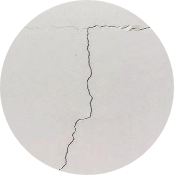
- Cracks in plaster or drywall
- Small holes, dents, or chips
- Moisture-related damage (such as bubbling or soft spots)
Why These Conditions Matter
Both uneven and damaged walls create a critical issue:
The surface is no longer continuous or stable.
This directly affects how adhesives perform because:
- There is less contact area for bonding
- The surface may be fragile or unstable
- Moisture or dust can further weaken adhesion
Does Peel and Stick Wallpaper Work on Uneven or Damaged Walls?
Short Answer:
In most cases, peel and stick wallpaper does NOT perform well on uneven or damaged walls.
Why It Fails on Imperfect Surfaces
Peel and stick wallpaper relies on consistent, full-surface adhesion. When the wall is uneven or damaged, this requirement is not met.
1. Incomplete Surface Contact
On an uneven wall, only the highest points make contact with the adhesive layer.
Result:
- Large portions of the wallpaper remain unsupported
- Adhesion strength is significantly reduced
2. Weak Bond on Damaged Areas
If the wall surface is already compromised (for example, peeling paint or loose plaster), the adhesive may stick to the damaged layer rather than the wall itself.
Result:
- The wallpaper may pull off the surface layer
- Entire sections can detach over time
3. Air Pockets and Bubbles
Irregular surfaces trap air between the wallpaper and the wall.
Result:
- Visible bubbling
- Uneven appearance
- Reduced durability
4. Increased Stress on Adhesive
Because the wallpaper is not evenly supported, stress is concentrated in certain areas.
Result:
- Edges begin to lift
- Corners peel away
- Adhesion weakens progressively
5. Shortened Lifespan
Even if installation appears successful at first, the wallpaper is more likely to fail over time due to:
- Gravity
- Temperature changes
- Humidity fluctuations
Are There Any Exceptions?
In limited situations, peel and stick wallpaper may work on:
- Very lightly uneven walls
- Well-prepared and sealed surfaces
- Thicker, higher-quality wallpaper materials
However, these cases are not reliable and often require additional preparation.
Common Problems You Will Face
When applied to uneven or damaged walls, peel and stick wallpaper often leads to predictable issues.
1. Wallpaper Not Sticking Properly
The most immediate problem is weak adhesion. The wallpaper may not fully stick during installation or may start detaching shortly after.
2. Edges Lifting and Peeling
Edges and corners are the most vulnerable areas. Once lifting begins, it typically spreads across the surface.
3. Air Bubbles and Wrinkles
Uneven surfaces make it difficult to smooth out the wallpaper, resulting in trapped air and visible imperfections.
4. Pattern Distortion
If the surface is inconsistent, patterns may appear misaligned or warped, especially in geometric designs.
5. Reduced Durability
Compared to smooth-wall applications, wallpaper installed on damaged surfaces tends to fail much sooner, requiring rework or replacement.
Can You Fix Uneven or Damaged Walls Before Applying Wallpaper?
In theory, uneven or damaged walls can be improved before applying peel and stick wallpaper. However, the process is often more complex than many people expect.
Common Wall Preparation Methods
1. Sanding the Surface
Sanding helps reduce small bumps and surface irregularities.
- Works best for light unevenness
- Cannot fix deep texture or structural issues
2. Skim Coating (Wall Leveling)
A thin layer of joint compound is applied to create a smoother surface.
- More effective for uneven walls
- Requires skill and time
- Needs drying and additional sanding
3. Priming the Wall
Applying a primer can:
- Improve adhesion
- Seal porous surfaces
- Create a more uniform base
Important Limitations
Even with preparation, there are important drawbacks:
- Increased labor and cost
- Requires tools and experience
- Results are not always consistent
- Does not fully eliminate structural problems
Key Insight
Wall preparation can improve conditions, but it does not guarantee that peel and stick wallpaper will perform reliably on uneven or damaged walls.
Better Alternatives for Uneven or Damaged Walls
When dealing with uneven or damaged wall surfaces, peel and stick wallpaper is often not the most reliable long-term solution. In professional interior projects, the key issue is not just decoration, but how to create a stable and consistent wall surface that can support finishing materials.
For this reason, industry solutions are typically divided into different levels depending on wall conditions.
1. Wall Repair and Surface Preparation (Basic Level)
The first approach is always to improve the wall itself before applying any decorative material. This may include:
- Sanding uneven areas
- Applying skim coat or plaster
- Using primer to improve surface adhesion
However, these methods are often time-consuming and may not fully resolve deeper surface inconsistencies, especially in older or damaged buildings.
2. Traditional Decorative Finishes (Standard Level)
Traditional wallpaper or paint systems are commonly used once the wall has been properly prepared. While these options work well on smooth and stable surfaces, their performance is still highly dependent on wall quality.
On uneven or damaged walls, even traditional finishes may show:
- Surface irregularities
- Reduced durability
- Visible imperfections over time
3. Engineered Wall Covering Systems (Professional Level)
For more challenging wall conditions, many modern interior projects adopt engineered wall covering systems designed to improve surface stability while maintaining decorative performance.
These systems are developed to:
- Adapt to minor wall irregularities
- Provide more consistent surface coverage
- Improve long-term durability compared to standard wallpaper
- Support both residential and commercial interior applications
Unlike peel and stick wallpaper, which relies heavily on perfect surface conditions, engineered wall covering systems are designed with real-world construction environments in mind.
TIANAN Textured Wall Covering Solution
At TIANAN New Materials, we provide textured wall covering solutions designed for interior spaces where wall conditions are not always ideal.
As part of a broader wall finishing system approach, our solutions are developed to support projects that require:
- More stable wall surface performance
- Better adaptation to uneven or imperfect substrates
- Long-term consistency in interior finishing applications
This makes them suitable for renovation projects, commercial interiors, and spaces where standard wallpaper may not provide sufficient reliability.
Rather than serving as a simple decorative layer, this type of wall covering is designed as part of a more structured wall finishing system, bridging the gap between surface imperfections and final interior design requirements.
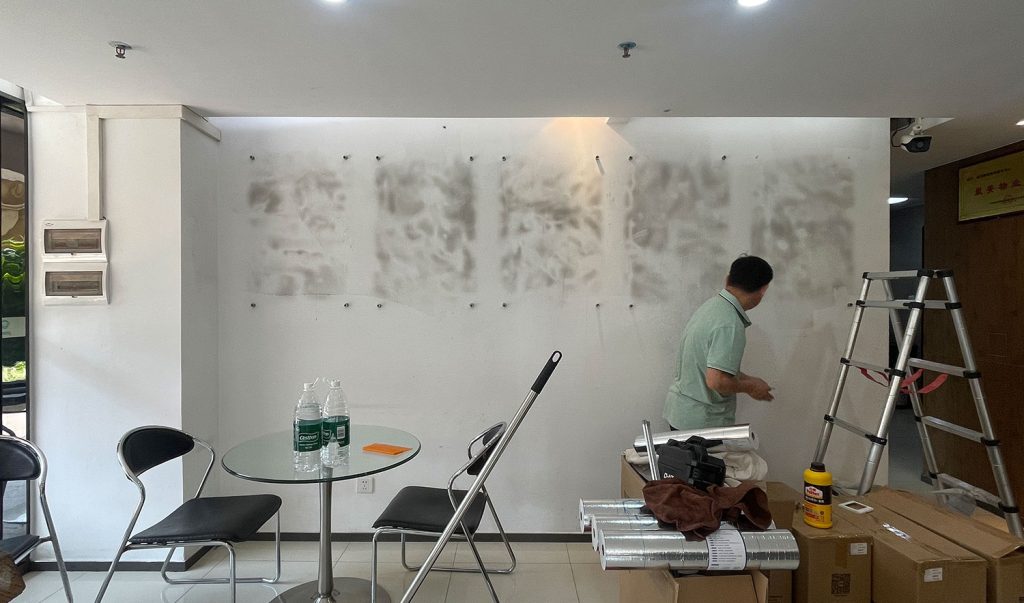
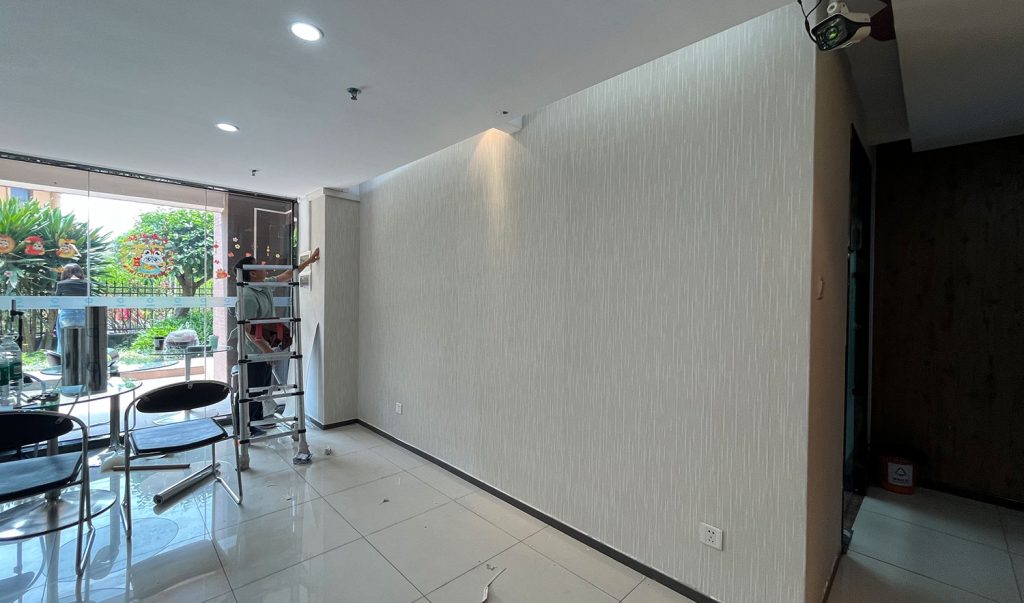
View Related Cases: Green Island Pearl Property Office – Renovation Project
When This Approach Is More Appropriate
Engineered wall covering systems are generally more suitable when:
- Walls are uneven or partially damaged
- Long-term durability is required
- Surface preparation is limited or not practical
- A more stable interior finish is needed
When Is Peel & Stick Wallpaper a Good Choice?
Despite its limitations, peel and stick wallpaper is still a useful solution in the right conditions.
Ideal Use Cases
- Smooth, well-prepared walls
- Temporary decoration projects
- Rental properties
- DIY home upgrades
Not Recommended For
- Uneven walls
- Damaged walls
- High-humidity environments
- Long-term applications
Key Takeaway
Peel and stick wallpaper is a convenience product, not a universal solution.
How to Choose the Right Wall Solution for Your Space
Choosing the right wall solution depends on multiple factors, not just design preference.
1. Evaluate Wall Condition
- Smooth wall → peel and stick wallpaper is suitable
- Uneven wall → requires preparation or alternative
- Damaged wall → repair or different solution needed
2. Consider Durability Needs
- Short-term use → removable wallpaper
- Long-term use → professional wall covering
3. Assess Budget and Installation
- Low budget + DIY → peel and stick wallpaper
- Higher budget + long-term → more durable systems
4. Think About Maintenance
- Some materials require frequent replacement
- Others offer long-term stability with minimal upkeep
Simple Decision Logic
- If your wall is smooth → peel and stick wallpaper works
- If your wall is uneven → preparation is needed
- If your wall is damaged → consider a more reliable solution
FAQs
It may work on very lightly uneven surfaces, but performance is usually unreliable. Adhesion problems are common.
No. Damaged surfaces such as peeling paint or cracked plaster significantly reduce adhesion and can cause the wallpaper to fail.
You can try sanding, priming, or leveling the wall. However, these methods increase complexity and do not guarantee long-term results.
Common reasons include: Uneven surfaces, Dust or moisture, Weak adhesion, Poor wall preparation
Yes, but only when used on smooth, clean, and properly prepared walls. It is not suitable for all environments.
Conclusion
Peel and stick wallpaper offers a convenient and flexible solution for interior decoration, but its performance depends heavily on wall conditions.
When applied to uneven or damaged walls, the results are often inconsistent and short-lived. Issues such as peeling, bubbling, and poor adhesion are common and can lead to additional costs and frustration.
Understanding your wall condition before installation is essential. In many cases, choosing a more suitable wall covering solution from the start is a smarter and more efficient approach.
If your walls are uneven or damaged and you need a more reliable, long-lasting solution, contact TIANAN timmy.wu@timotechs.com today to explore professional wall covering options designed to perform in real-world conditions.