Choosing the best SPC flooring isn’t about finding the thickest plank, the highest wear layer, or the most expensive brand. High-quality SPC flooring is the result of multiple factors working together, including manufacturing precision, core stability, locking system performance, surface durability, and proper installation.
Many buyers focus on specifications that look impressive on paper, while flooring professionals often evaluate completely different aspects. If you’re planning to invest in SPC flooring for your home or commercial project, this guide explains what really matters—and what doesn’t.
Why Choosing the Right SPC Flooring Is More Important Than Choosing the Most Expensive One
The SPC flooring market has grown rapidly over the last few years, offering thousands of products at vastly different price points. While many products appear similar, their long-term performance can vary significantly.
Two floors may both advertise:
- 100% Waterproof
- 20 mil Wear Layer
- Click Lock Installation
- Lifetime Warranty
Yet one may perform flawlessly for decades, while the other develops joint separation, edge damage, or locking failures within a few years.
The difference often comes down to manufacturing quality rather than marketing specifications.
Instead of asking:
“Which SPC flooring brand is the best?”
A better question is:
“How can I recognize high-quality SPC flooring?”
Let’s examine the factors professionals consider before recommending an SPC floor.
1. Don’t Judge SPC Flooring by Wear Layer Alone
One of the biggest misconceptions is that a thicker wear layer automatically means better flooring.
While the wear layer protects the decorative surface from scratches and abrasion, it is only one part of the overall flooring system.
Many buyers compare products like this:
- 12 mil
- 20 mil
- 22 mil
- 30 mil
Naturally, they assume the thicker option must be superior.
In reality, wear layer thickness should match the intended application.
Residential Applications
For most homes, a quality 12–20 mil wear layer provides excellent protection against everyday foot traffic, furniture movement, and pets.
Commercial Applications
Retail stores, offices, schools, and hospitality projects generally benefit from thicker commercial-grade wear layers because they experience significantly heavier daily traffic.
More importantly, a thick wear layer cannot compensate for poor manufacturing quality.
If the locking system fails or the core lacks stability, the floor can still separate or deform regardless of wear layer thickness.
Takeaway:
Choose an appropriate wear layer for your application, but never use it as the only indicator of quality.
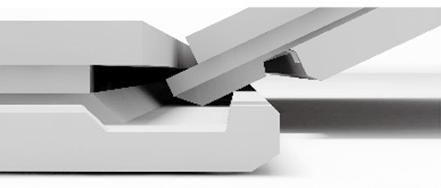
2. A Reliable Locking System Is One of the Most Important Quality Indicators
Ask experienced flooring installers what causes most SPC flooring failures, and many will point to the locking system.
The click-lock mechanism connects every plank together, allowing the floor to remain stable under daily expansion, contraction, and movement.
A poorly engineered locking profile can lead to problems such as:
- Joint separation
- Broken edges
- Chipped corners during installation
- Gaps appearing over time
- Difficult installation
High-quality locking systems provide:
- Tight and consistent plank connections
- Smooth installation
- Strong resistance to repeated foot traffic
- Better dimensional stability
Even premium materials cannot compensate for an inaccurate locking profile.
When comparing suppliers, ask about their locking technology, manufacturing precision, and quality control process instead of focusing only on decorative features.
3. Manufacturing Precision Matters More Than Most Buyers Realize
Many flooring buyers have never heard of milling accuracy, but manufacturers and professional installers know how critical it is.
Milling refers to the precision used when cutting every plank and machining its locking profile.
Even tiny dimensional differences between planks can create installation problems.
Poor machining may result in:
- Uneven joints
- Visible gaps
- Difficult click installation
- Locking damage
- Reduced floor stability
High-quality manufacturers invest heavily in advanced production equipment and strict quality inspections to ensure every plank maintains consistent dimensions.
This level of precision may not be visible inside a showroom, but it often determines how well the flooring performs years after installation.
4. Core Quality Determines Long-Term Stability
The SPC core forms the structural foundation of the flooring.
A high-quality core should provide excellent dimensional stability under changing temperatures and humidity while maintaining sufficient impact resistance.
Important characteristics include:
Stable Material Formulation
A properly engineered SPC core helps minimize expansion and contraction, reducing the likelihood of movement after installation.
Consistent Density
Uniform density contributes to structural integrity and better locking performance.
Flat and Straight Planks
Quality manufacturers maintain tight production tolerances to ensure planks remain flat, making installation easier and improving long-term performance.
Rather than asking only about plank thickness, ask whether the manufacturer follows strict quality control standards throughout production.
Thickness alone does not determine durability.
5. Thickness Doesn’t Always Mean Better Flooring
Many buyers automatically assume:
- 8 mm is better than 5 mm.
- Thicker flooring lasts longer.
While thicker products may offer additional rigidity or acoustic benefits in certain situations, thickness itself is not a guarantee of higher quality.
The actual performance of SPC flooring depends on several factors working together:
- Core construction
- Manufacturing precision
- Locking system
- Subfloor condition
- Installation quality
For many residential projects, properly manufactured 4–6 mm SPC flooring can deliver outstanding long-term performance when installed over a flat, properly prepared subfloor.
In commercial environments, thicker products may be selected based on project requirements rather than simply because “thicker is better.”
The goal should always be selecting the right flooring for the intended application—not simply choosing the thickest option.
6. Surface Performance Goes Beyond Scratch Resistance
Many manufacturers advertise scratch resistance, but surface performance involves much more than resisting minor scratches.
A quality surface should also provide:
- Excellent stain resistance
- Easy cleaning
- UV resistance to reduce fading
- Long-lasting decorative appearance
- Protection against everyday household wear
For commercial environments, maintaining appearance over years of heavy use is often just as important as preventing scratches.
The quality of the UV coating and surface finishing process plays a major role in preserving the floor’s appearance throughout its service life.
7. Installation Quality Can Make or Break Any SPC Floor
Even the highest-quality SPC flooring can fail if it is installed incorrectly.
Professional installers often point out that many flooring problems are caused by installation mistakes rather than product defects.
Common installation issues include:
- Uneven or unprepared subfloors
- Insufficient expansion gaps
- Damaged locking joints during installation
- Incorrect installation direction
- Failure to follow manufacturer guidelines
These mistakes can lead to:
- Gaps between planks
- Edge lifting
- Locking failure
- Floor movement
- Squeaking or noise
Before installation, the subfloor should always be clean, dry, and level. Even slight unevenness can place unnecessary stress on the locking system over time.
For this reason, choosing an experienced installer is just as important as choosing a high-quality floor.
Need help with installation? Explore our complete guide to SPC flooring installation.
8. Certifications Matter—But Only When They Are Relevant
Many buyers immediately look for certification logos, and while certifications are important, understanding what they represent is even more valuable.
Depending on your market, look for certifications that demonstrate product quality, environmental performance, or regulatory compliance.
Examples include:
- FloorScore® – Indicates low VOC emissions and contributes to healthier indoor air quality.
- CE – Demonstrates compliance with applicable European regulations.
- REACH – Addresses chemical safety requirements within the European market.
- RoHS – Restricts the use of certain hazardous substances in applicable products.
- ISO 9001 – Reflects a quality management system focused on consistent manufacturing.
- ISO 14001 – Demonstrates an environmental management system.
Rather than counting the number of certificates, verify that they are current, issued by recognized organizations, and relevant to your target market.



9. The Manufacturer Behind the Product Matters More Than the Brand Name
Many buyers focus on well-known flooring brands, assuming that a recognizable name automatically guarantees better quality.
However, the flooring industry operates differently from many other consumer markets.
Many brands source products from the same manufacturing facilities, while some manufacturers produce flooring for multiple international brands through OEM or ODM partnerships.
Instead of judging a product solely by its logo, consider asking questions such as:
- Does the manufacturer have stable production capabilities?
- What quality control procedures are in place?
- Can they provide consistent quality across production batches?
- Do they support product customization?
- Do they have experience supplying international markets?
- What technical support and after-sales service do they provide?
For distributors, importers, and project contractors, selecting a reliable manufacturing partner often has a greater impact on long-term success than selecting the most recognizable brand.
10. Think About Long-Term Value, Not Just Purchase Price
Low-priced SPC flooring may seem attractive initially, but flooring is a long-term investment.
A lower purchase price can become more expensive over time if the product experiences:
- Premature wear
- Locking failures
- Frequent repairs
- Early replacement
- Customer complaints
On the other hand, premium pricing alone does not guarantee premium quality.
The best value comes from balancing:
- Product performance
- Manufacturing quality
- Durability
- Installation reliability
- Warranty support
- Supplier credibility
Instead of asking:
“What’s the cheapest SPC flooring?”
Ask:
“Which SPC flooring will still perform well 10 or 20 years from now?”
That question usually leads to a much better purchasing decision.
Quick Checklist: How to Choose the Best SPC Flooring
Before making your decision, use this checklist to evaluate any SPC flooring product:
- ✔ Choose a wear layer that matches your application rather than simply selecting the thickest option.
- ✔ Evaluate the quality of the locking system for secure, long-lasting plank connections.
- ✔ Look for precise manufacturing and consistent plank dimensions.
- ✔ Consider the stability and quality of the SPC core.
- ✔ Focus on overall construction instead of thickness alone.
- ✔ Assess surface durability, stain resistance, and UV protection.
- ✔ Ensure the flooring is installed over a properly prepared subfloor.
- ✔ Verify certifications relevant to your market.
- ✔ Research the manufacturer’s production capabilities and quality control.
- ✔ Compare long-term value instead of purchase price alone.
FAQs
There is no single factor that determines quality. A well-designed locking system, precise manufacturing, stable core construction, durable surface, and proper installation all work together to deliver long-term performance.
Not necessarily. Residential applications often perform exceptionally well with a quality 12–20 mil wear layer, while commercial environments may require thicker options. Wear layer thickness should be matched to the expected traffic level rather than viewed as the sole indicator of quality.
Not always. Thickness alone does not determine durability. Manufacturing quality, locking system design, and installation practices have a greater influence on the floor’s long-term performance.
No. Higher prices may reflect enhanced features, premium finishes, or additional certifications, but they do not automatically guarantee superior quality. The best approach is to evaluate the product’s overall construction, manufacturing standards, and supplier reliability.
Brand reputation can be helpful, but it should not be the only deciding factor. Many trusted brands source products from experienced manufacturers. Understanding the manufacturer’s quality control, production consistency, and technical capabilities provides a more complete picture of product quality.
Conclusion
Choosing the best SPC flooring is not about finding the product with the highest wear layer, the greatest thickness, or the most recognizable brand. It is about understanding what truly influences long-term performance.
A high-quality SPC floor combines a stable core, precision manufacturing, a reliable locking system, durable surface protection, and proper installation. When these elements work together, the result is flooring that remains attractive, stable, and dependable for years to come.
Whether you are a homeowner, distributor, or project contractor, focusing on these fundamentals will help you make a more informed decision and achieve better long-term value from your investment.
Need help choosing the right SPC flooring for your project? Contact timmy.wu@timotechs.com today for expert advice, product recommendations, and customized solutions tailored to your market and application.